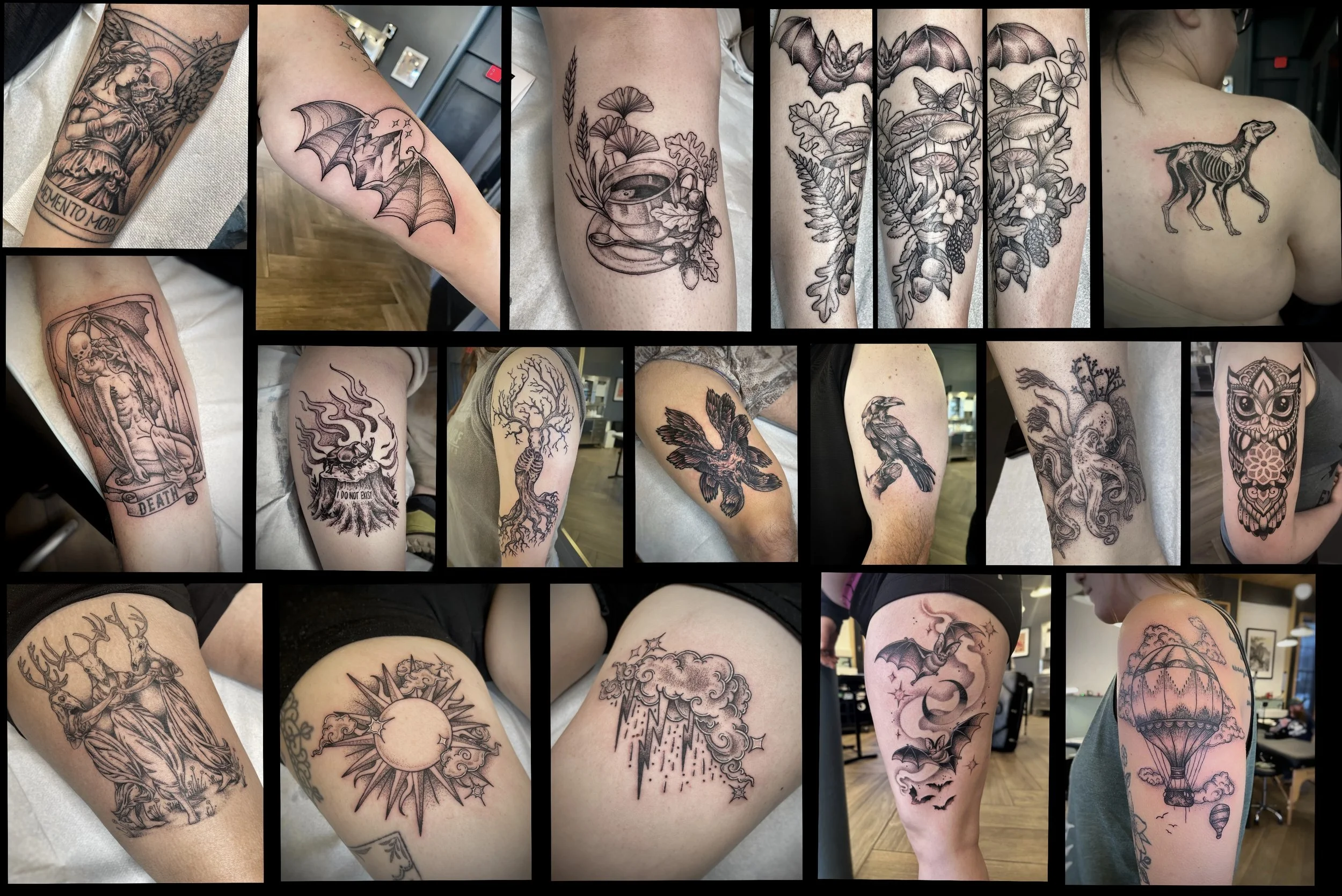
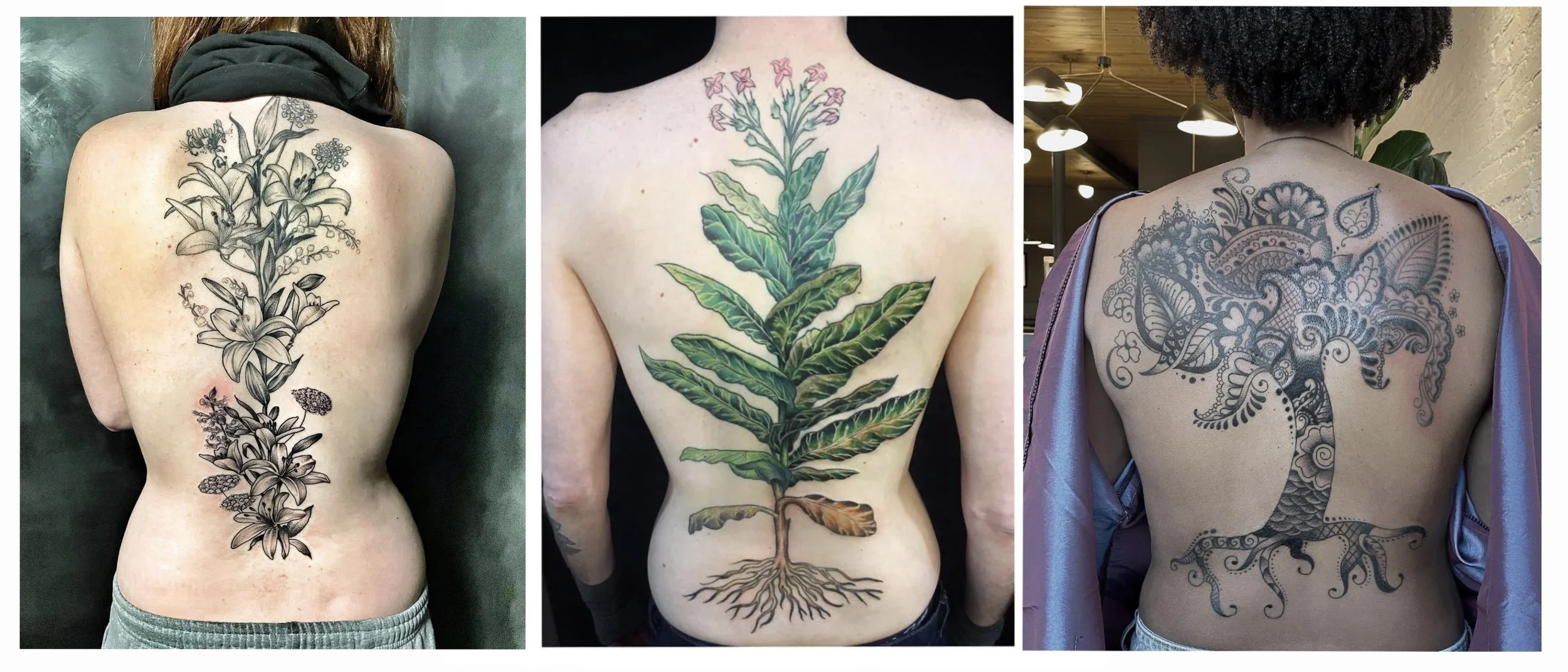
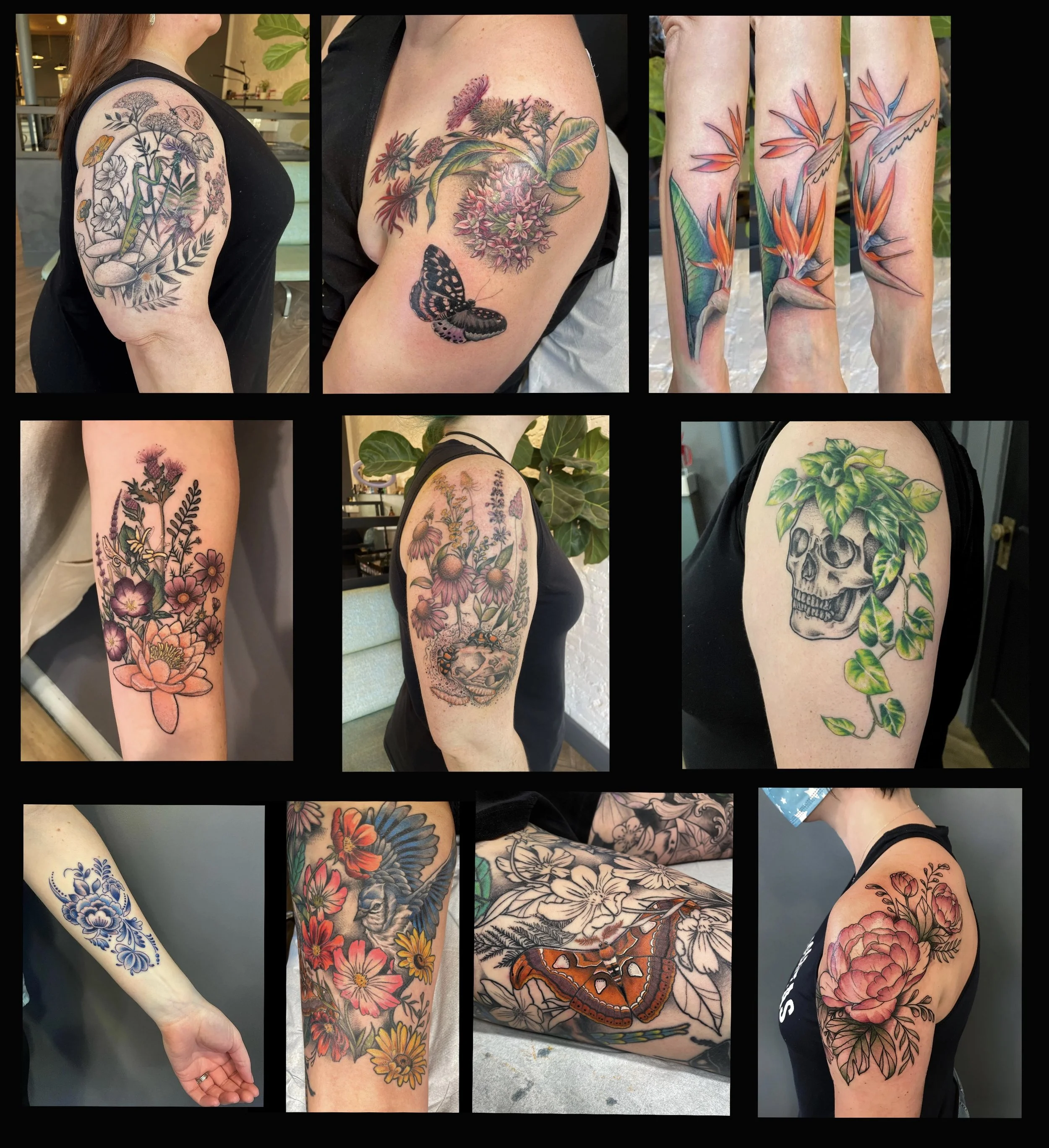
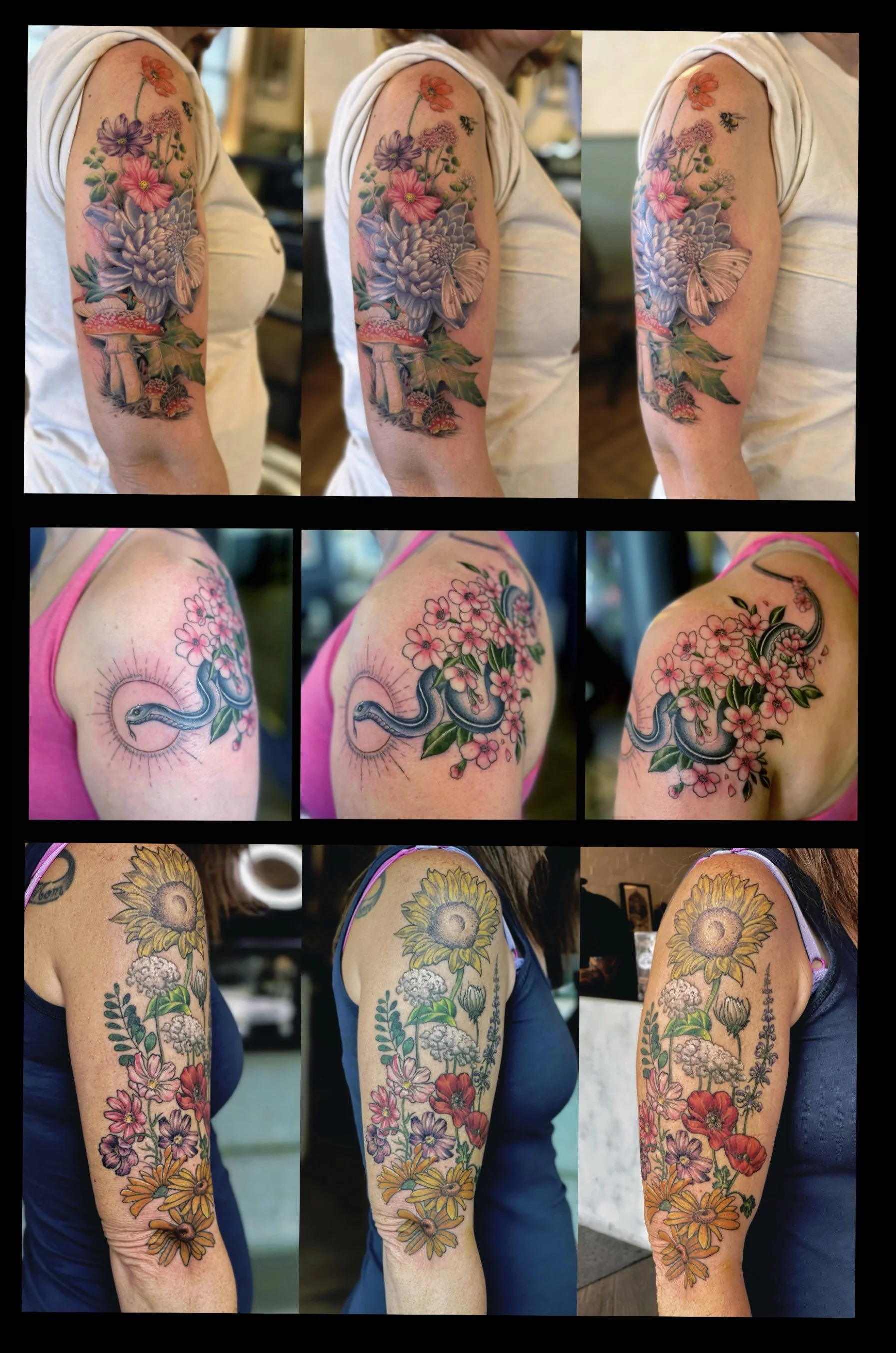
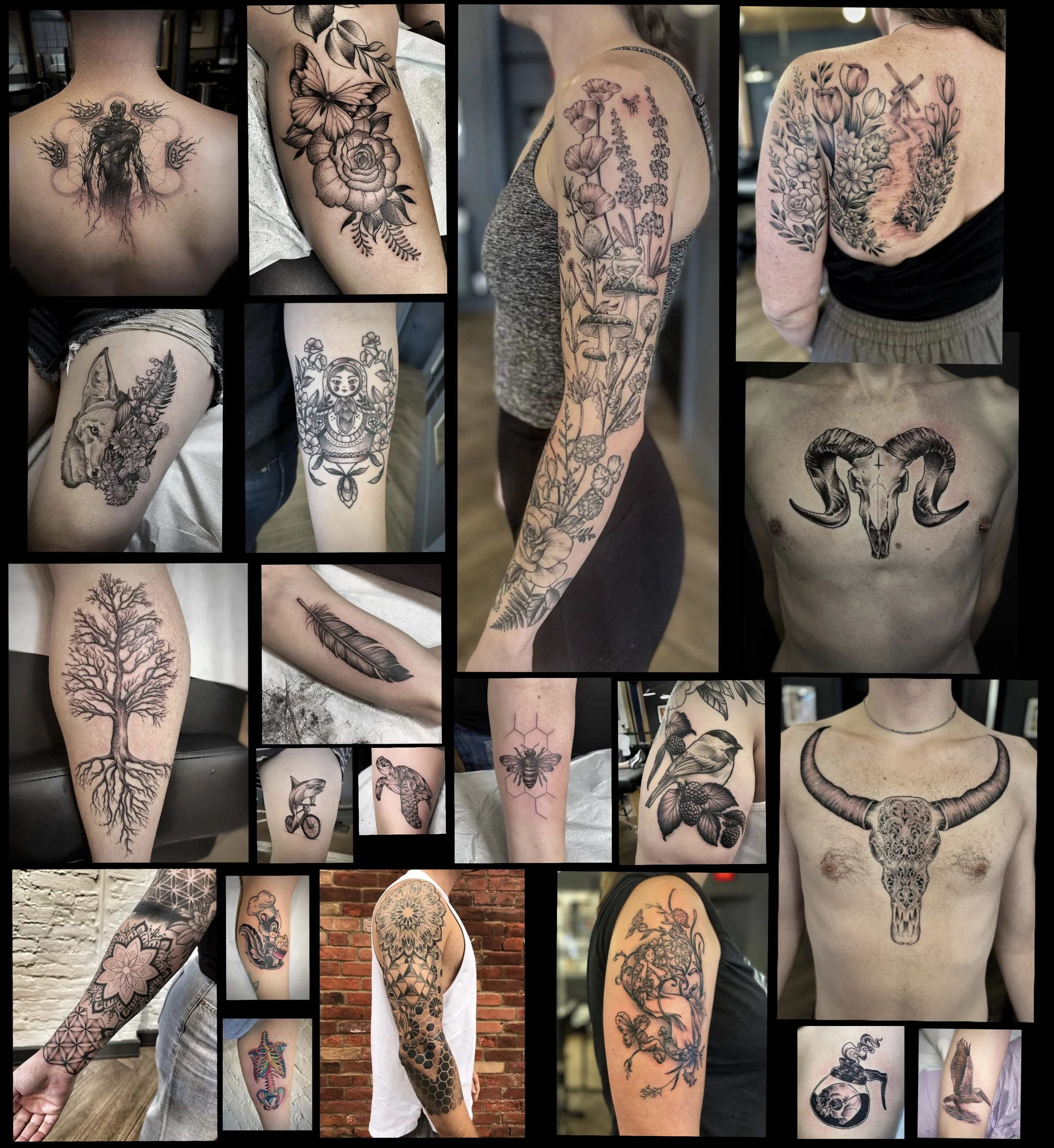
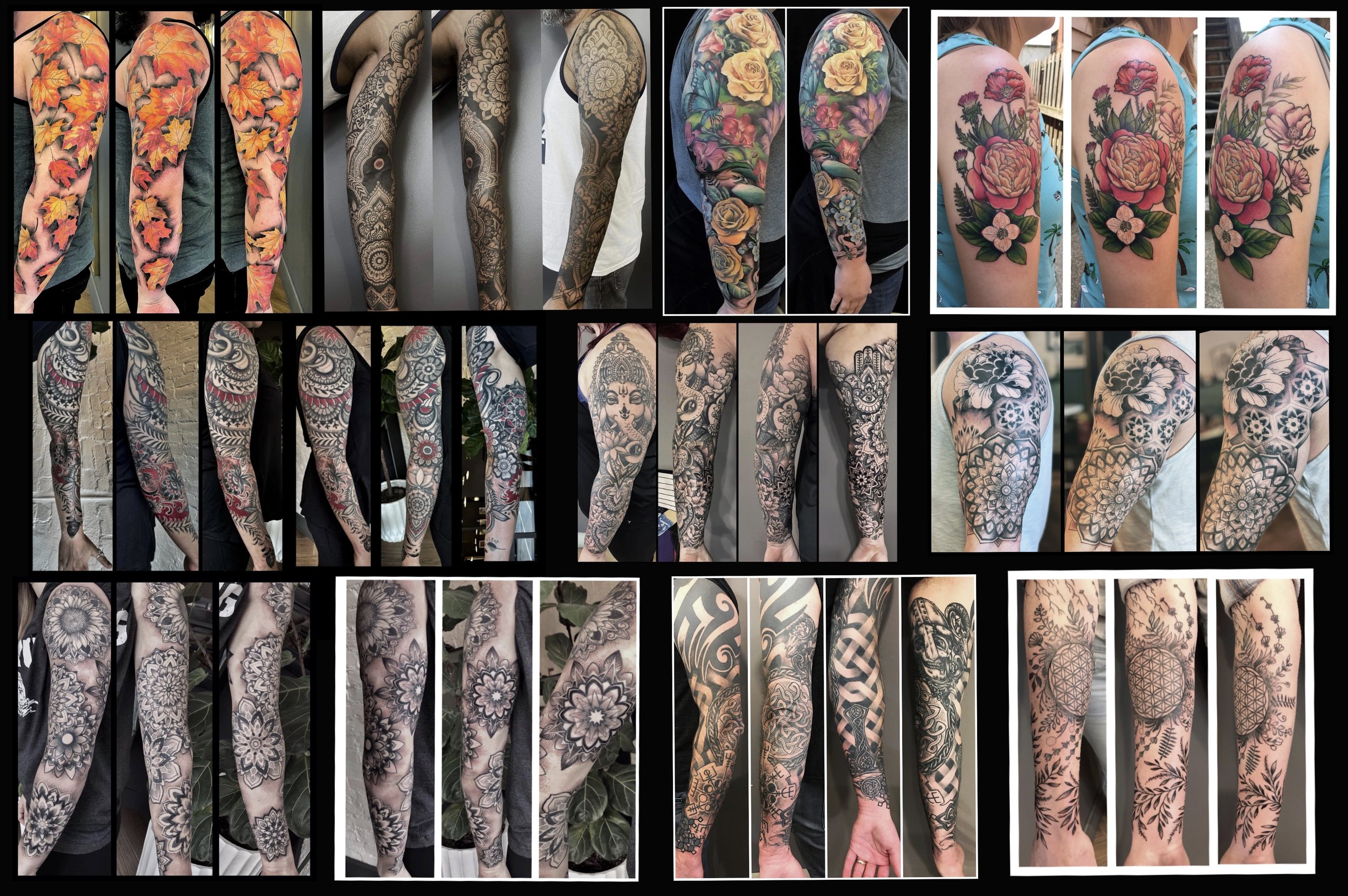
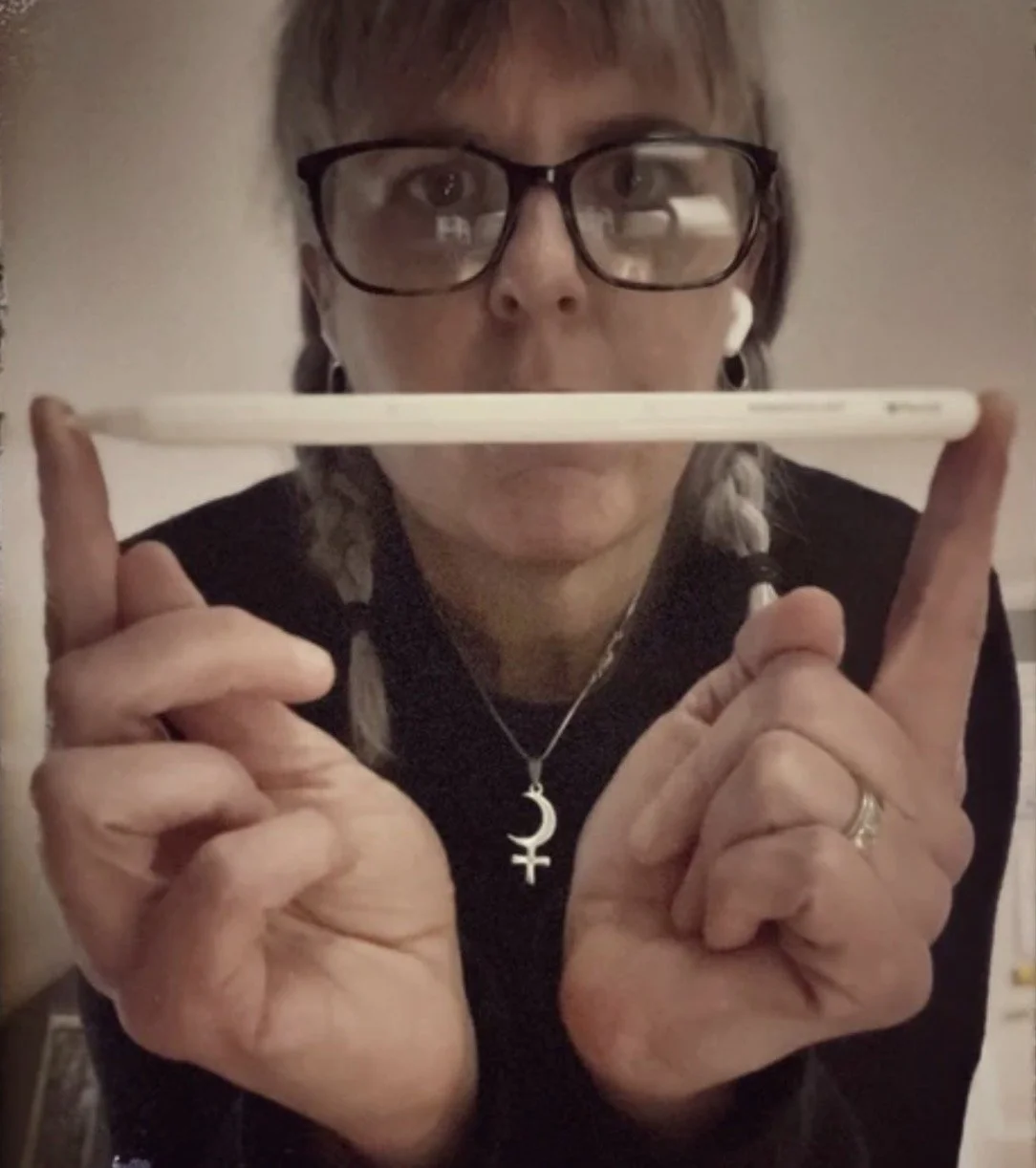
I have been tattooing since 2007 for Mothers Tattoo in Covington Kentucky.
If you are interested in booking with me please see the information section about booking which is listed in the menu of this website.
I post my newest tattoos on Instagram @nomadicaltattoo and Facebook www.facebook.com/nomadicalart
For the past couple of years, I’ve painted, drawn digitally, and experimented with printmaking. When the new year arrived, I decided to slow down and simplify my approach to creating art. I found myself burned out from drawing on an iPad, and after a tumultuous year trying to master etching and relief printing, I decided to take a lengthy break from printmaking.
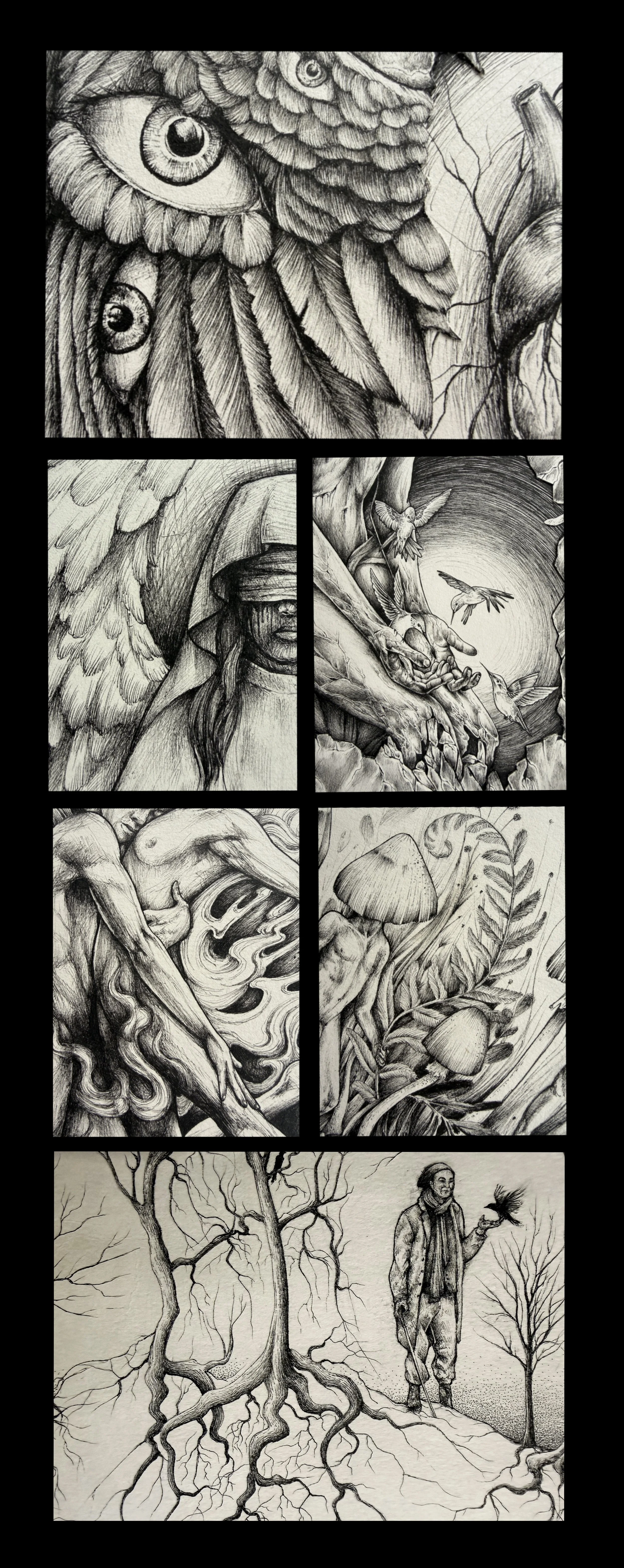
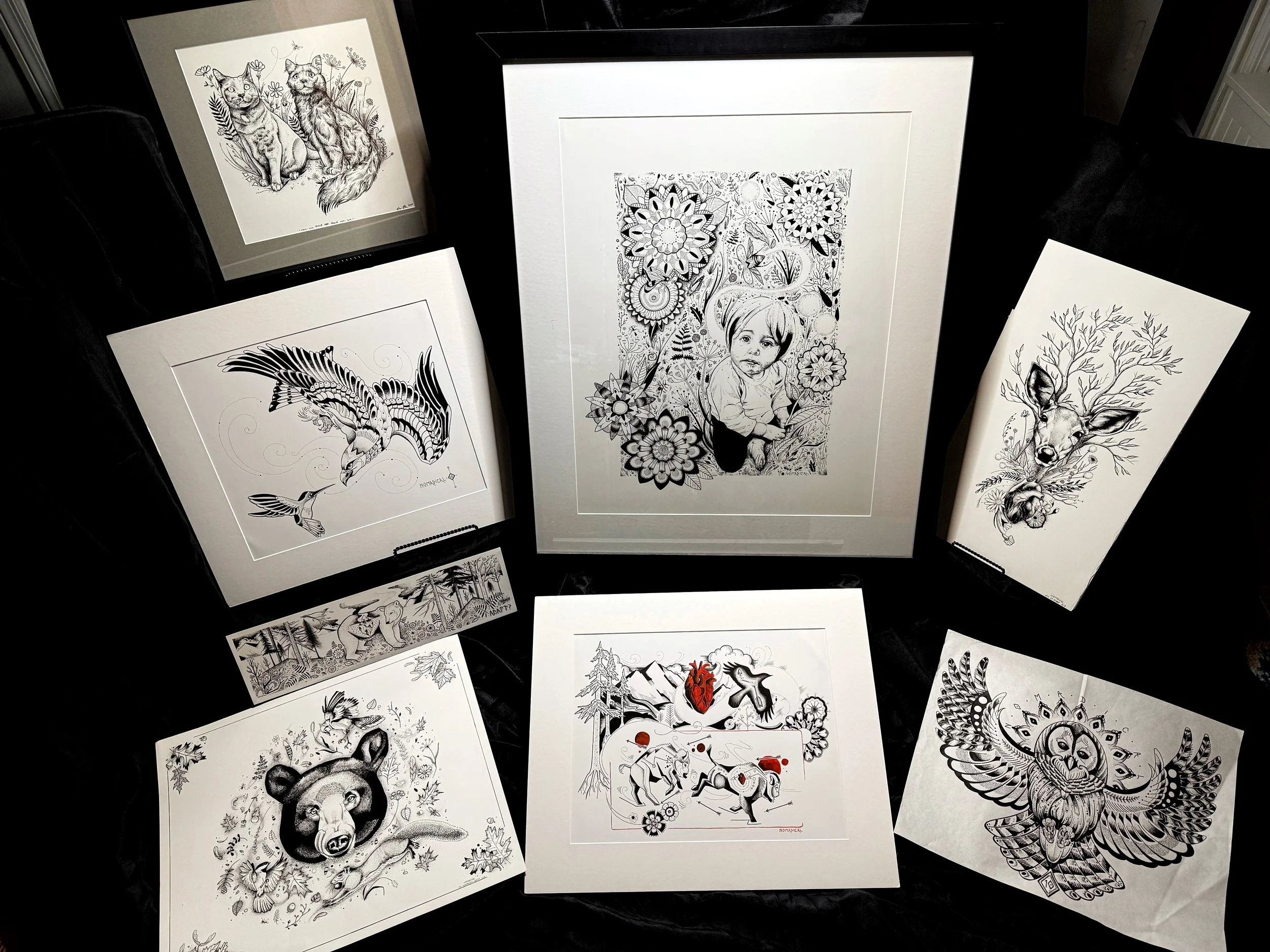
One night, I decided to revisit something I hadn’t done in a long time: drawing on paper. Instead of merely sketching rough ideas, I aimed to create completed artworks. With a loose concept in mind, I allowed myself the freedom to take my time and build up details slowly. After a few days, I completed a drawing using pens, and I fell in love with the process all over again.
After that first drawing, I recognized the direction I wanted to take and committed to continuing my exploration of paper drawing for the coming year.
This gallery will have much more to come later on in the year.
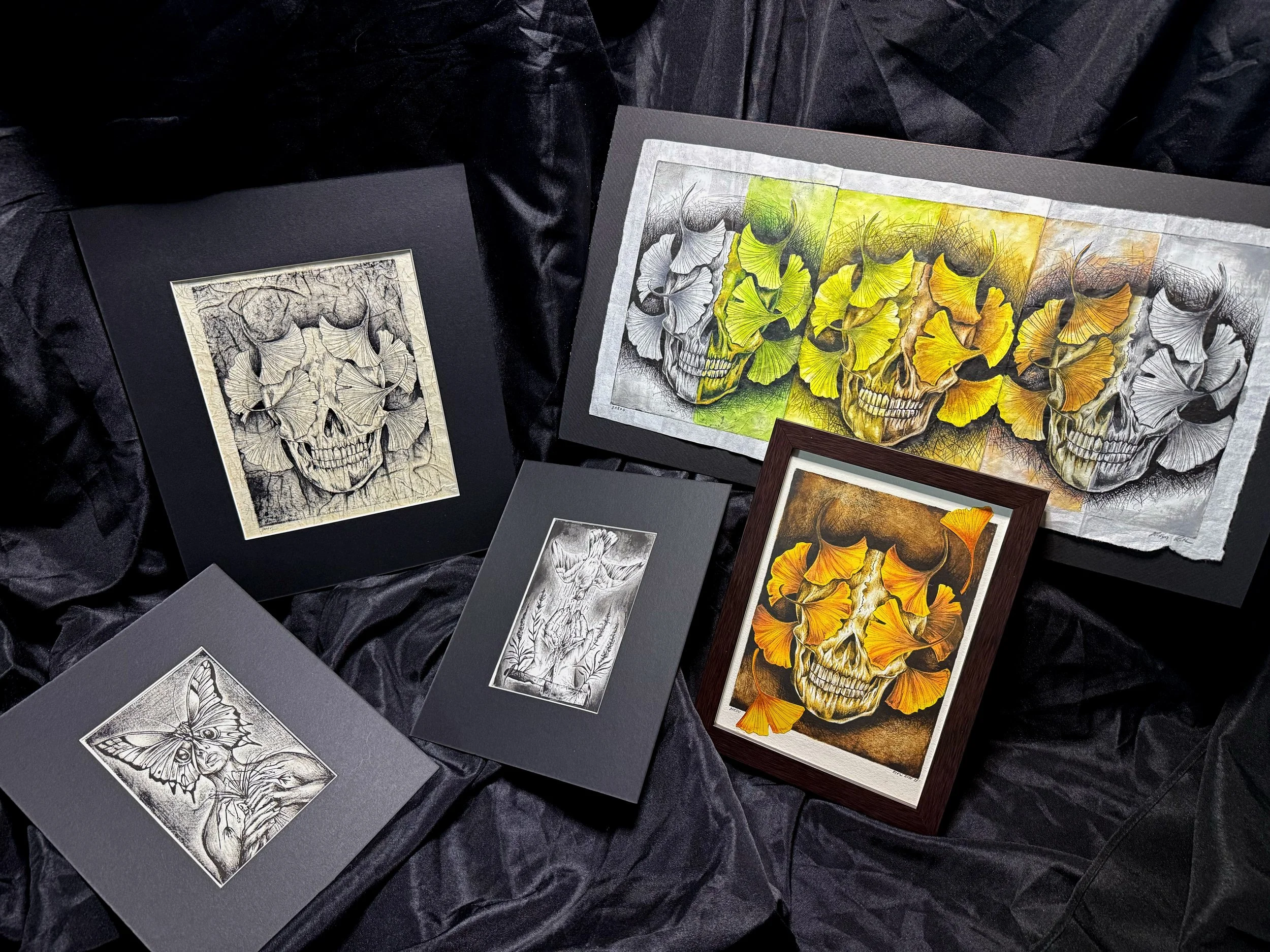
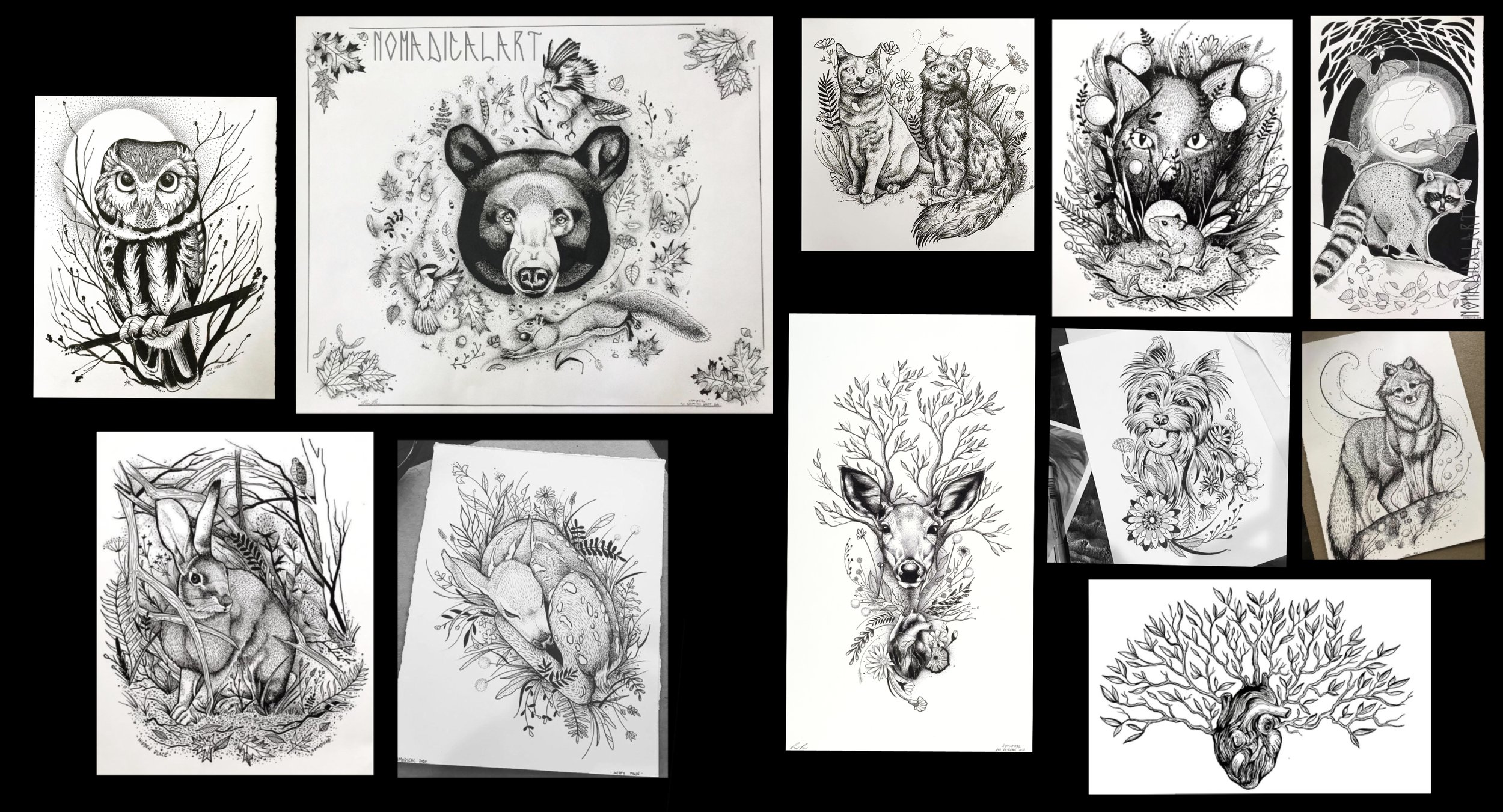
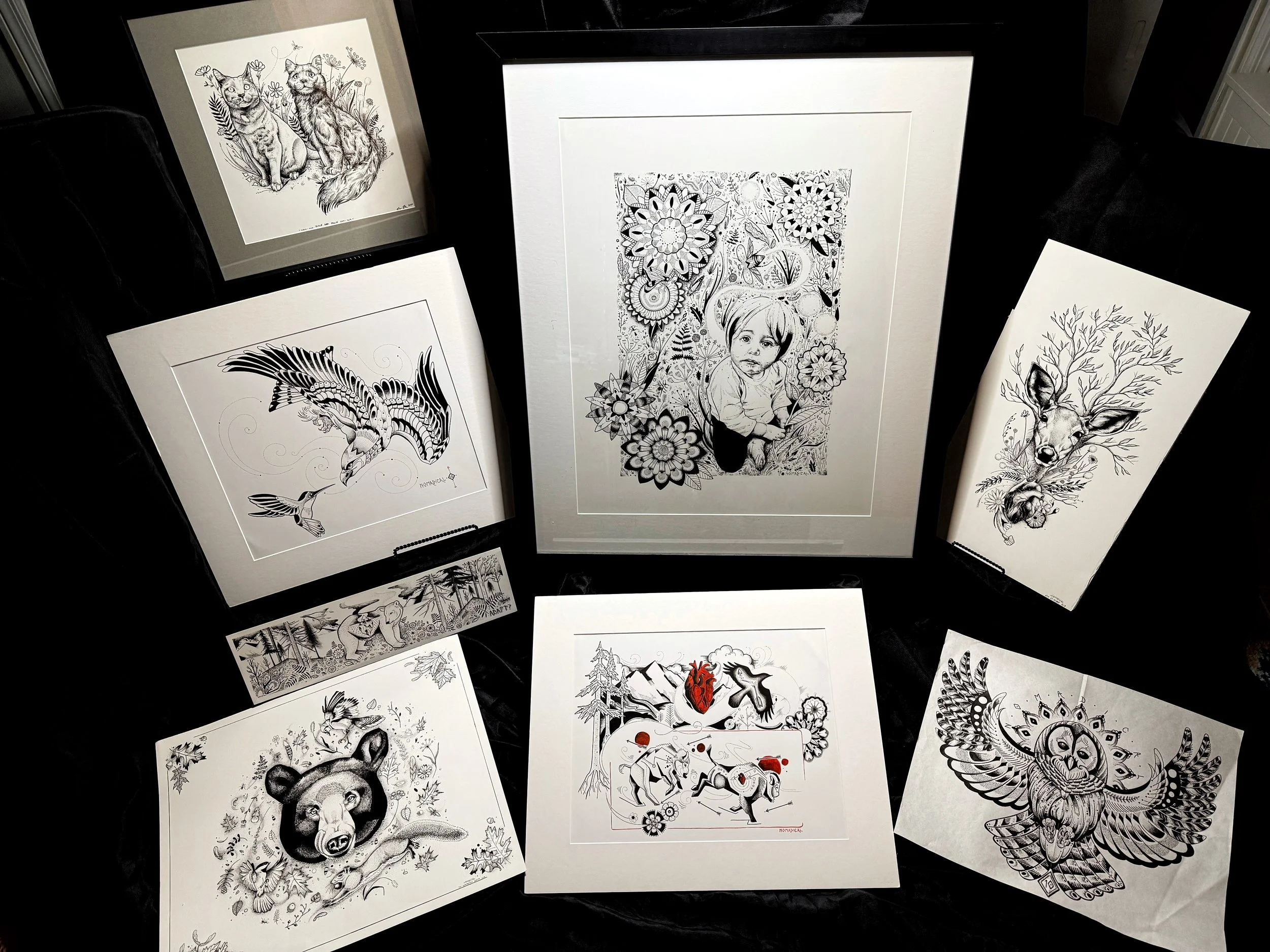
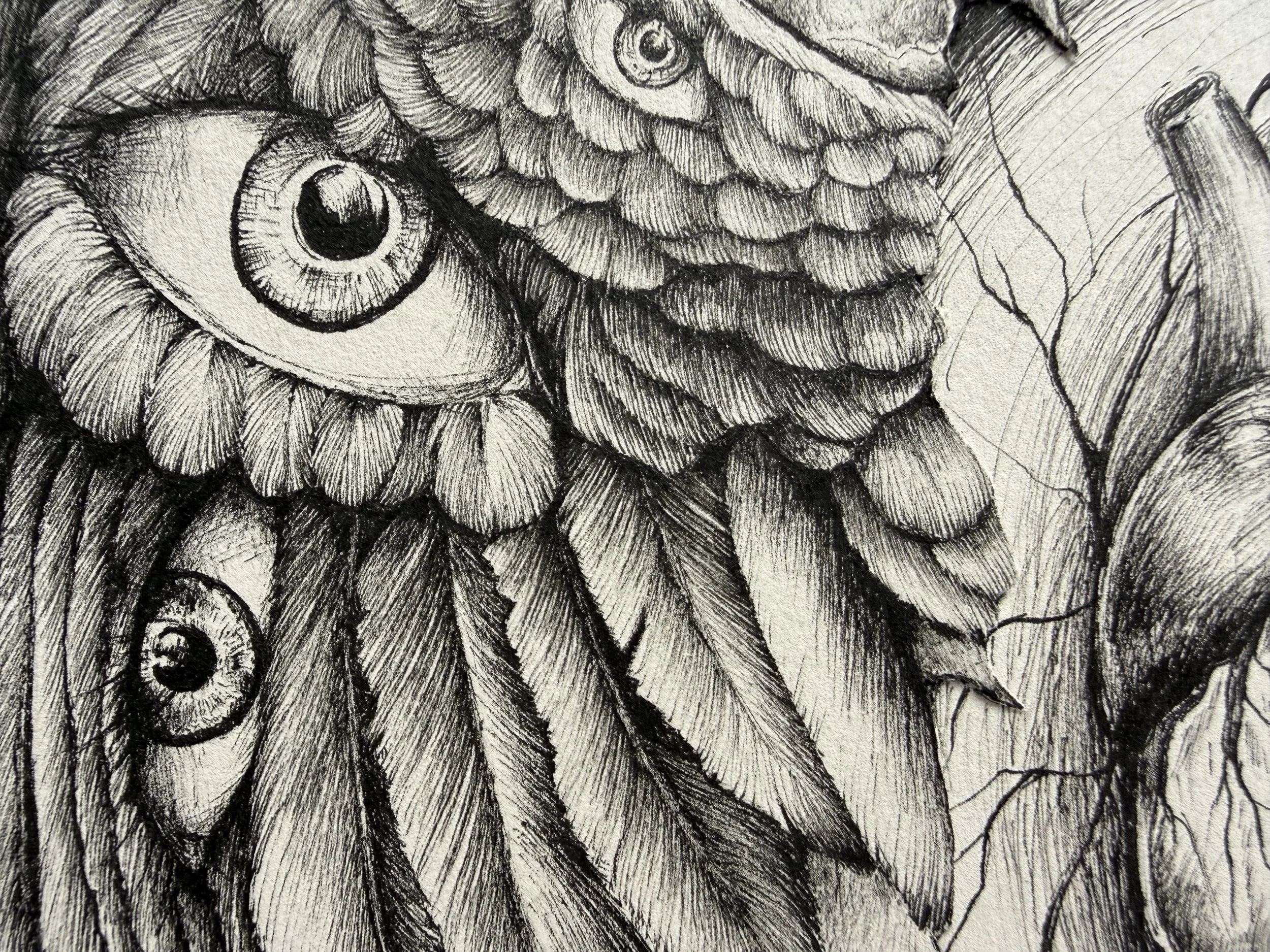
A sample of drawings I’ve been working on this year. All made with pencil and ink pens on rag papers like Stonehenge and Arches. These drawings are dedicated to my dear friend and teacher Dr. Wm. Kevin Booher who passed away in July of 2026. He had a lot to do with making this series come to life.
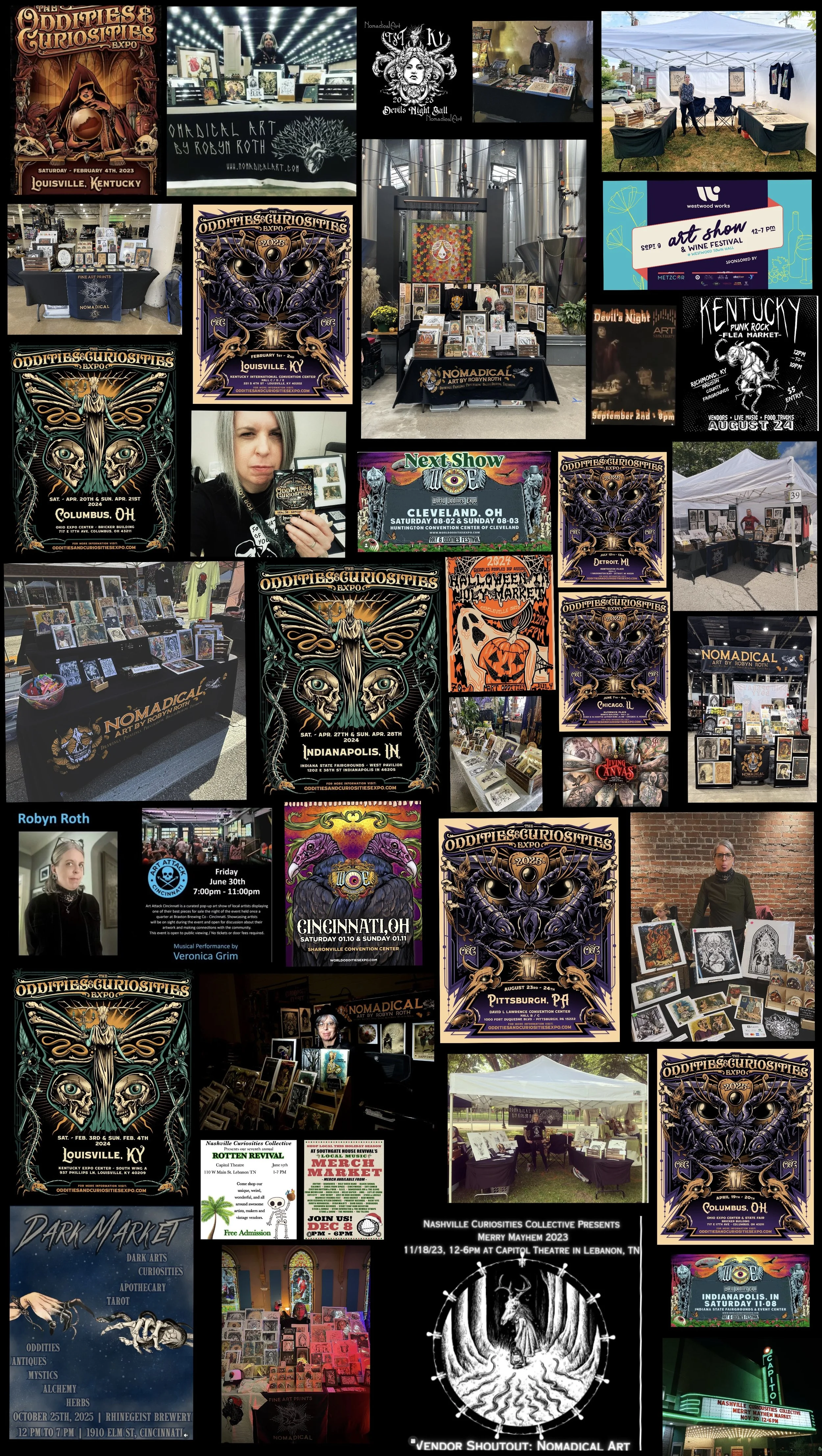
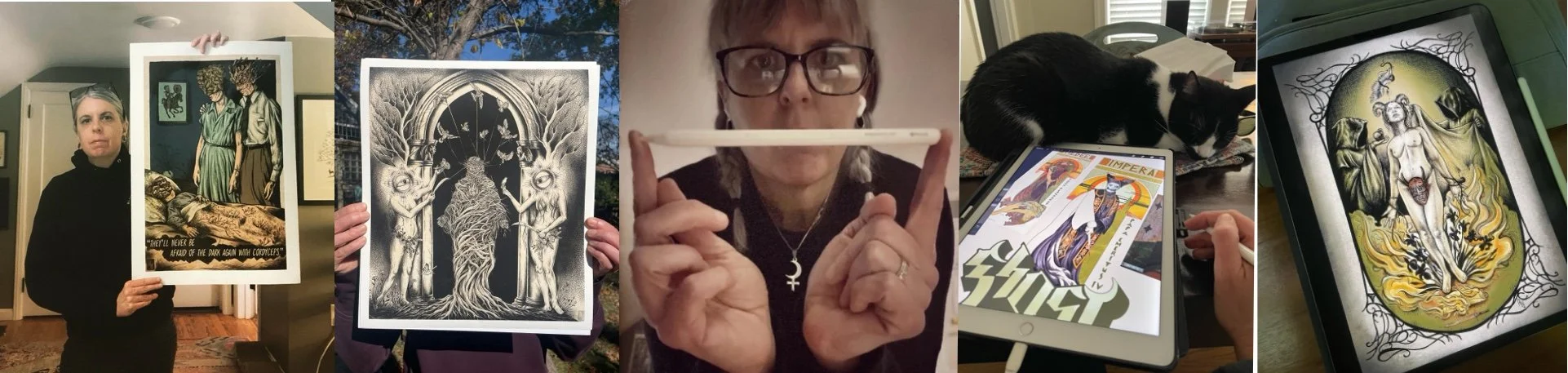
This gallery is dedicated to the exhibitions and vending events I’ve participated in. I’m sharing show posters alongside some personal photos of me at my vending table.
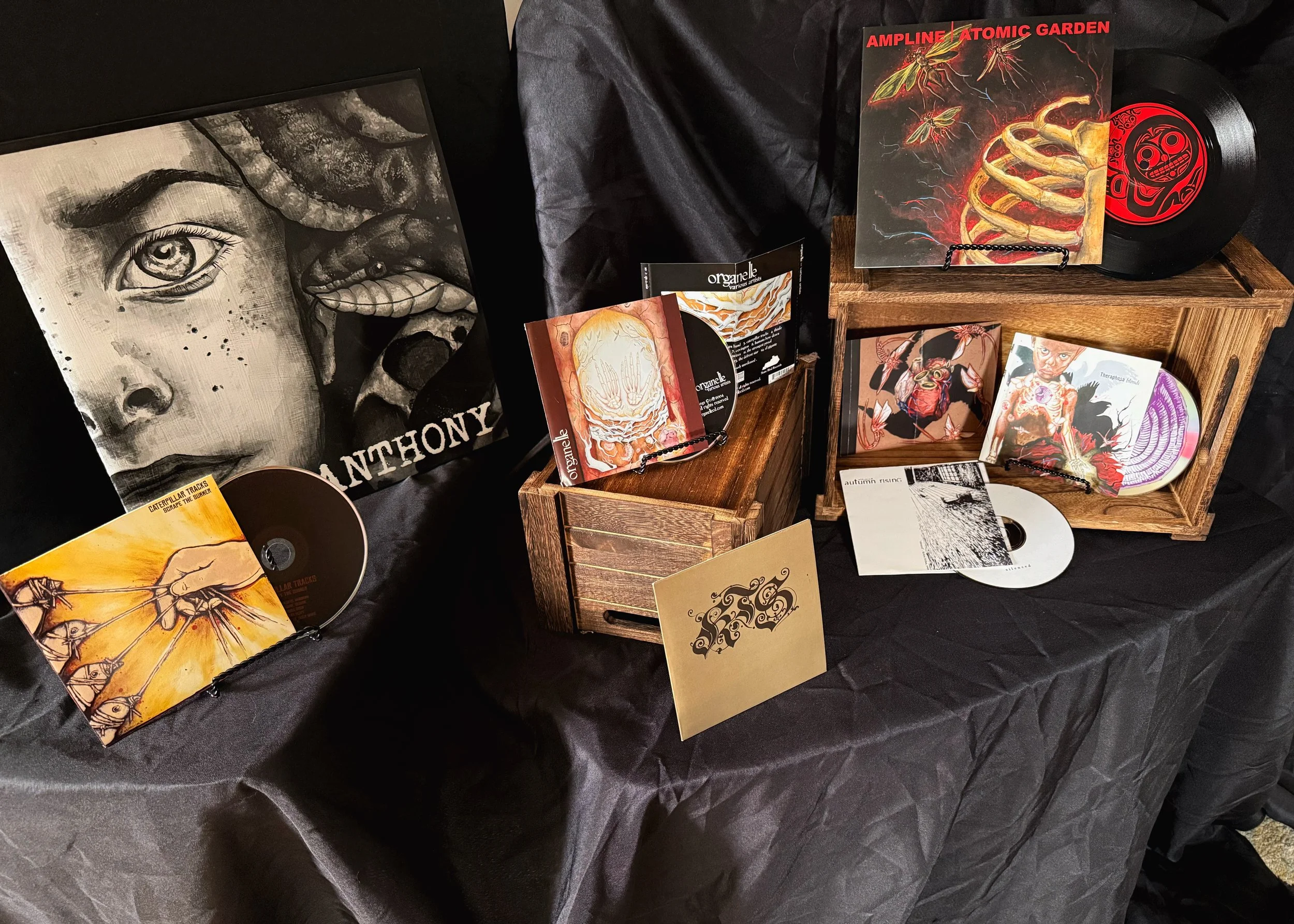
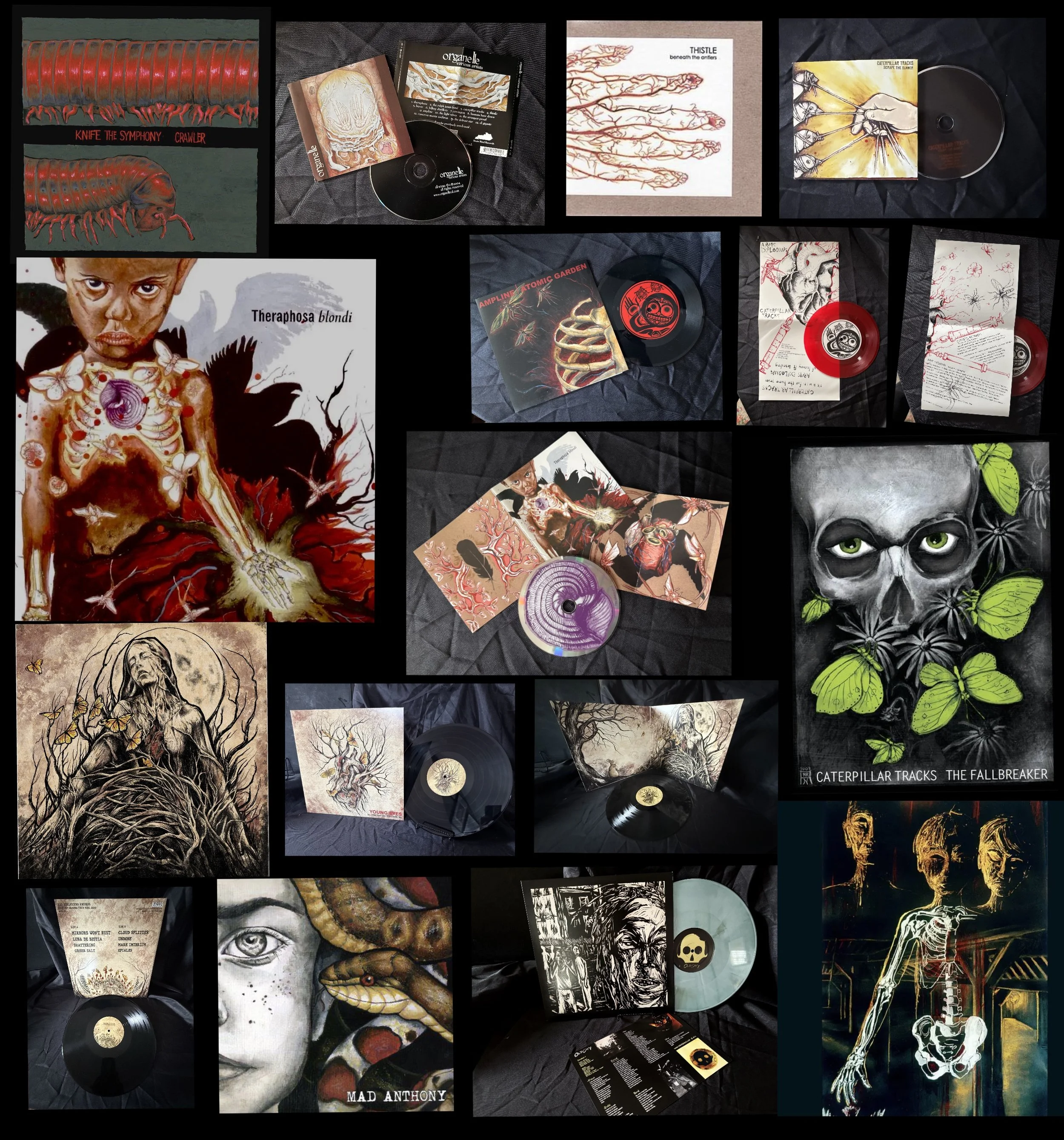
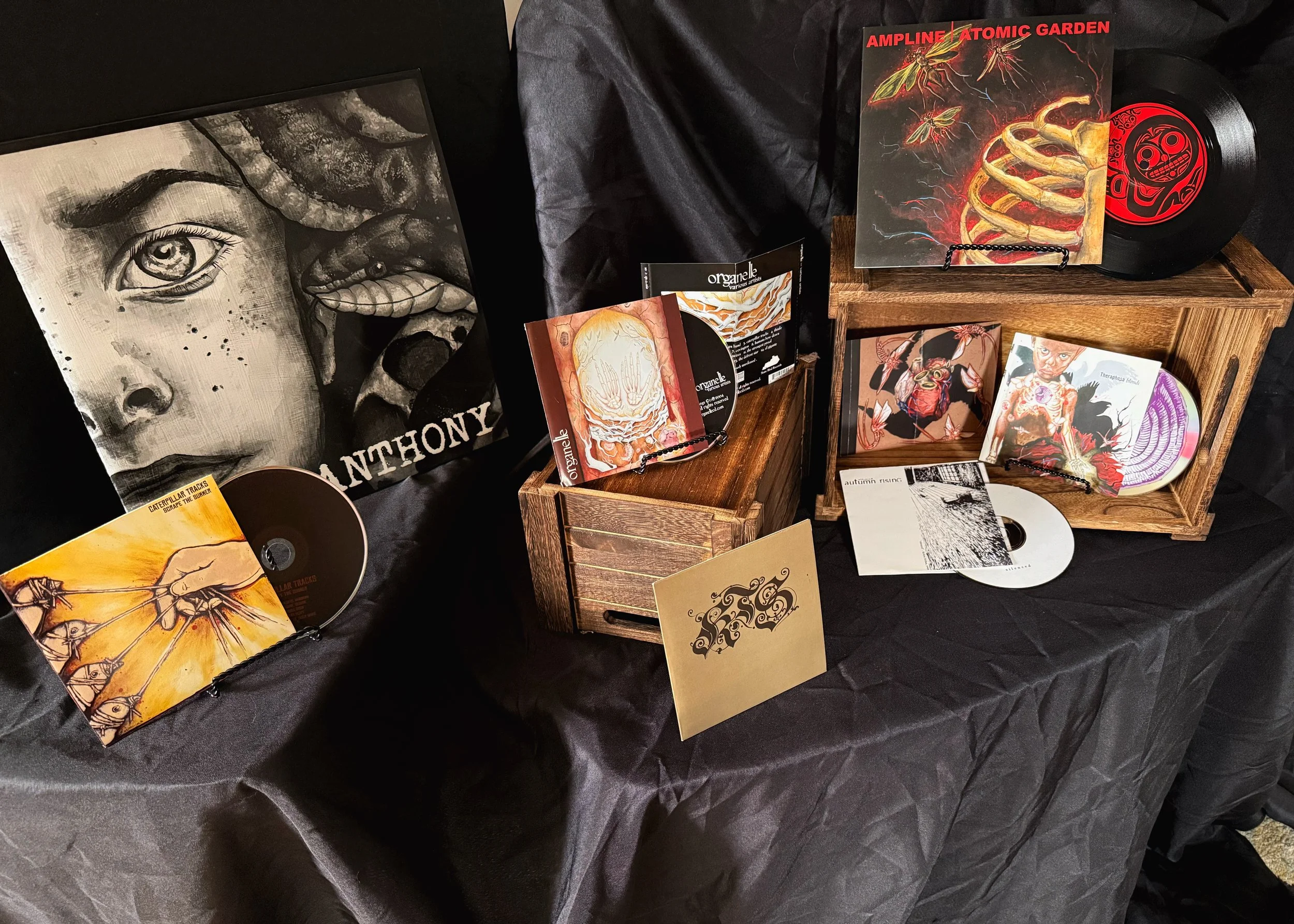
You can also see artwork I've created for several local musicians in the Cincinnati, Ohio area. I never fully realized how much I contributed to the local scene I was a part of, and it’s been wonderful to see all the albums come together in one photograph.
Photographs of commission work I’ve done for businesses, Ghost and other organizations will be displayed here in the near future.
A few of the records that I made artwork for or that artwork I had previously made was used for. The first records were as early as 1999 and my last album design was for Young Eyes in 2023. I also helped design the Phratry Records logo design with label owner Jerry Dirr. You can see the logo printed on the vinyl that was inspired by Pacific Northwest Coast Indigenous art.
Most of what I have done is in this photograph. Hopefully I’ll continue to make more in the future.
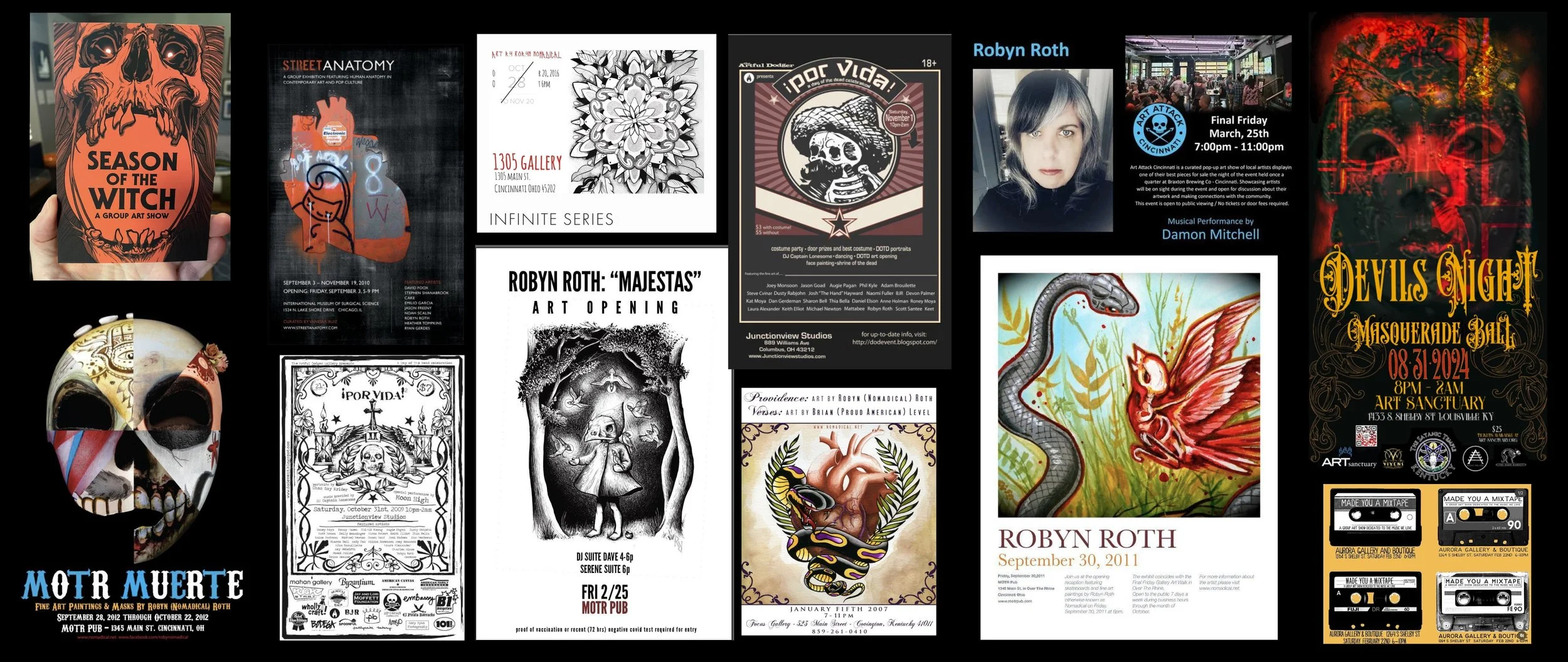
Past Exhibitions from solo shows as well as group art shows.
My first ever vending show was in Cincinnati Ohio for the Westside Arts and Wine festival in 2021. I gradually moved up and later that same year I applied for my first ever oddities show for 2022. I was accepted right away with the Oddities and Curiosities Expo. I’ve grown significantly from there as you can see in the photos.
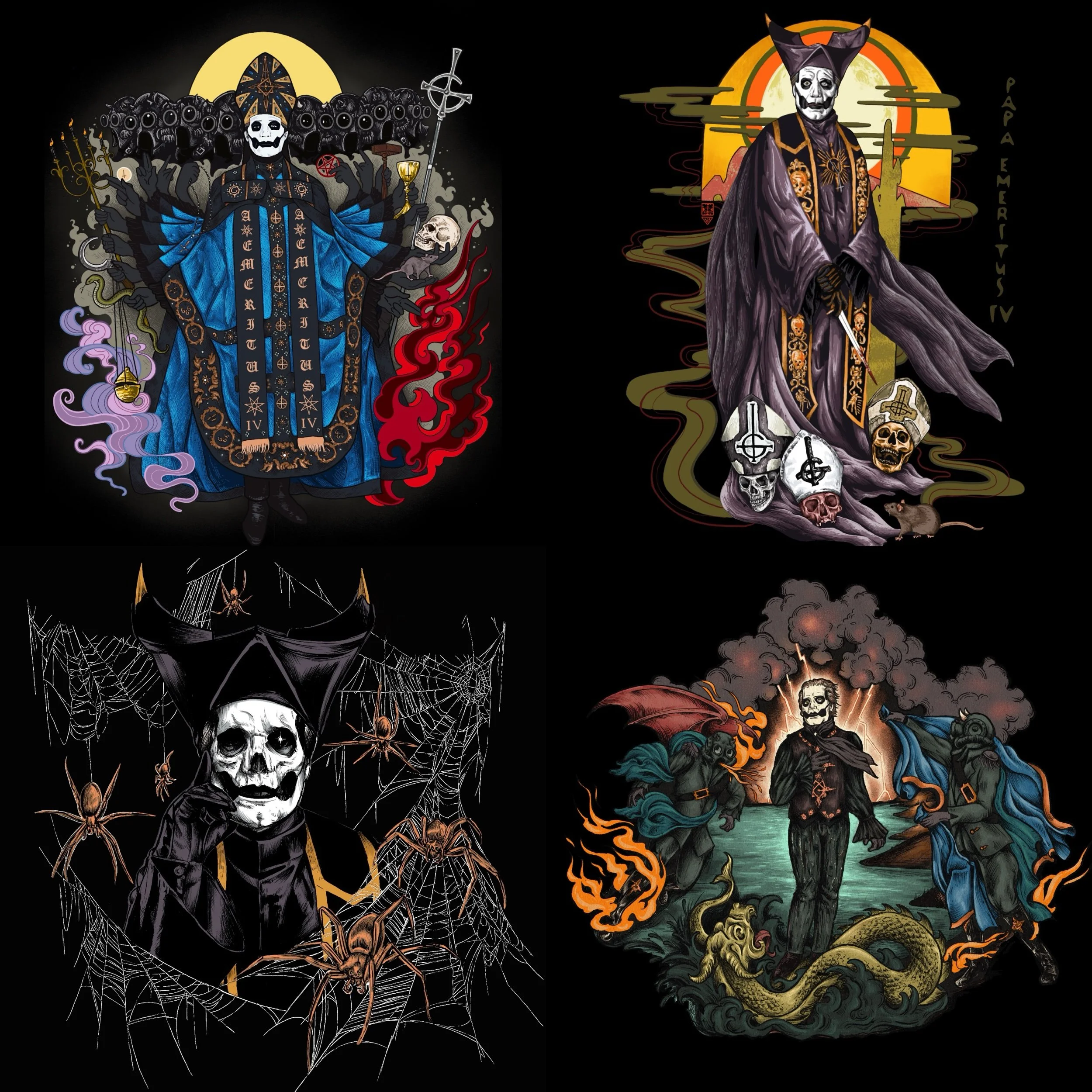
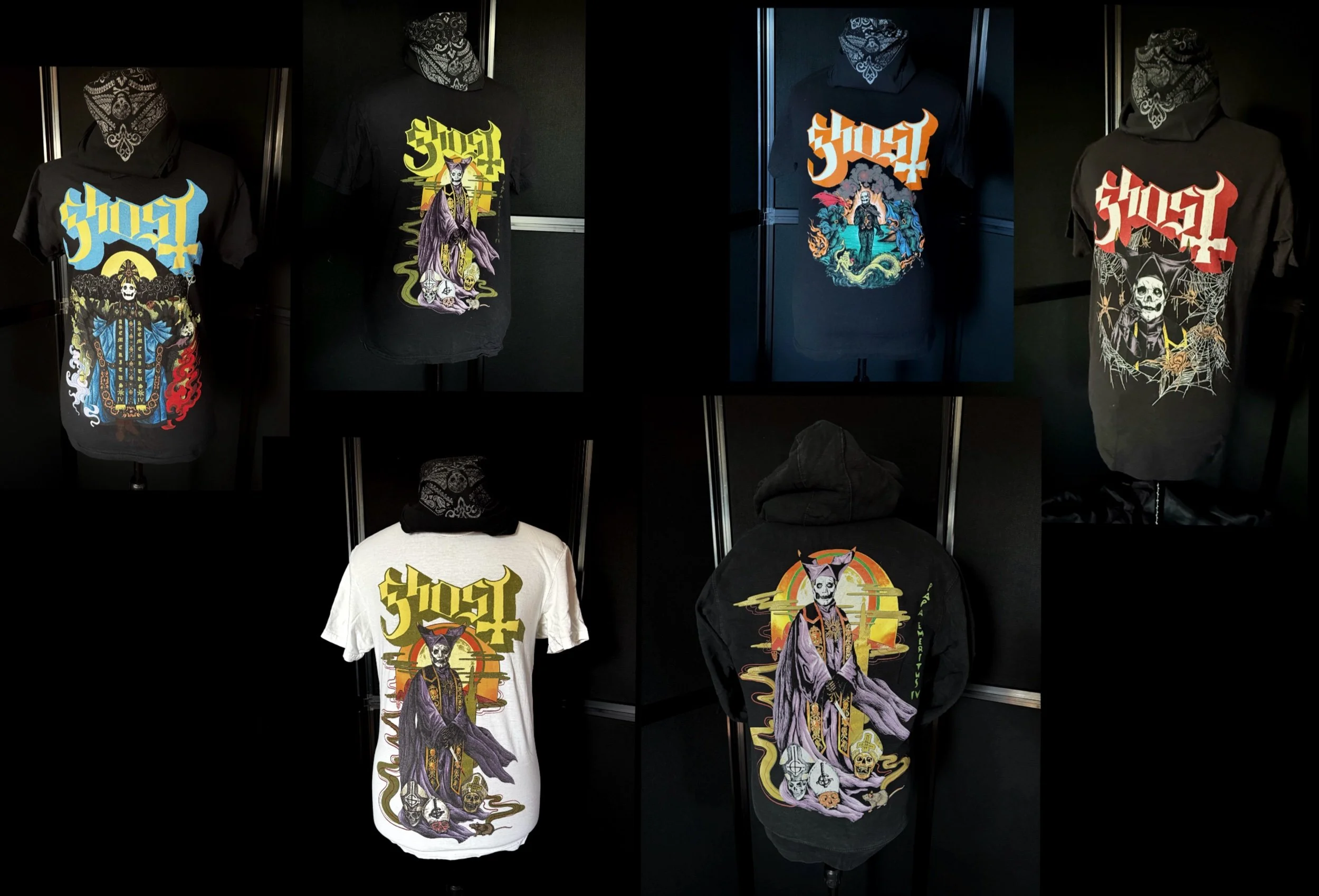
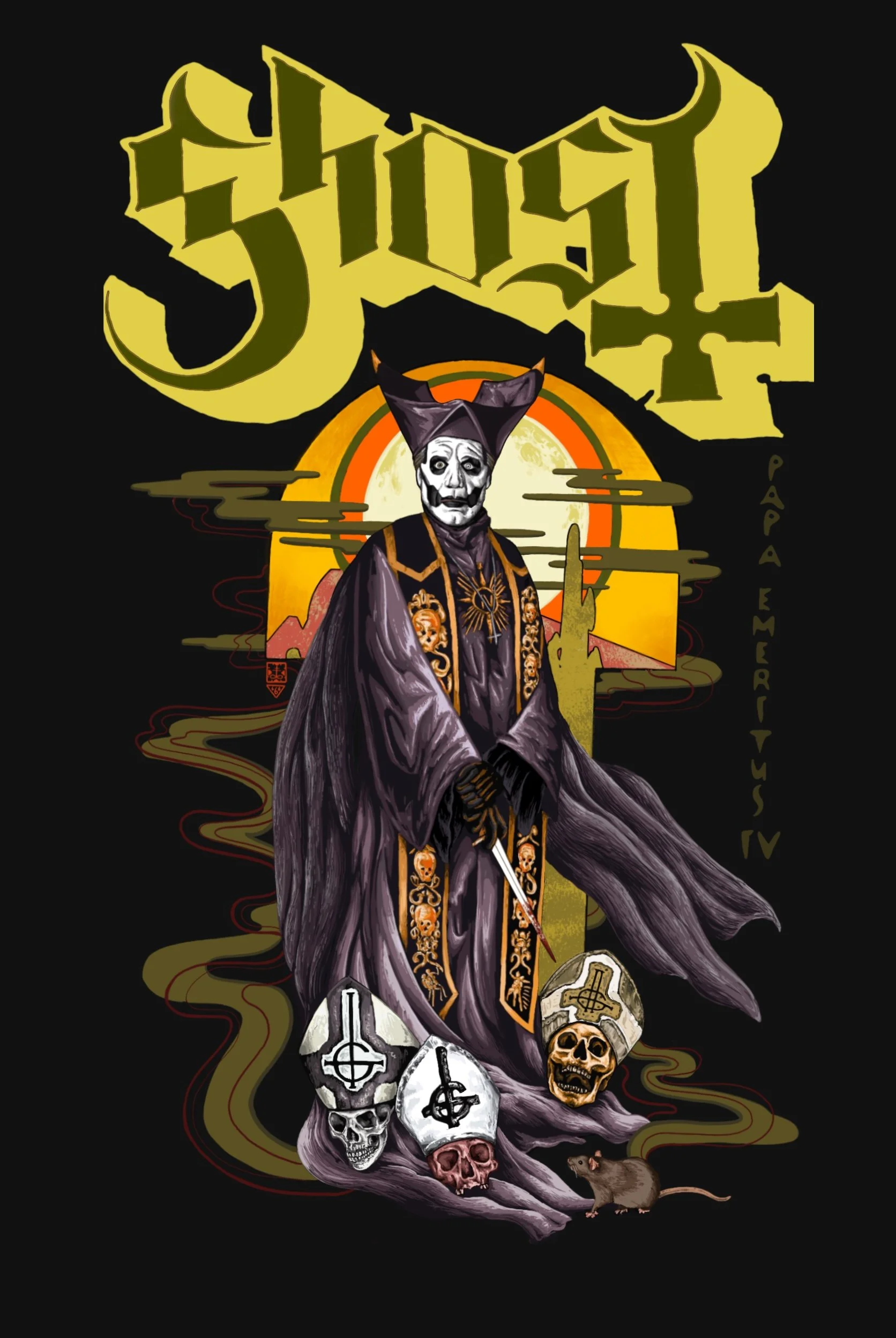
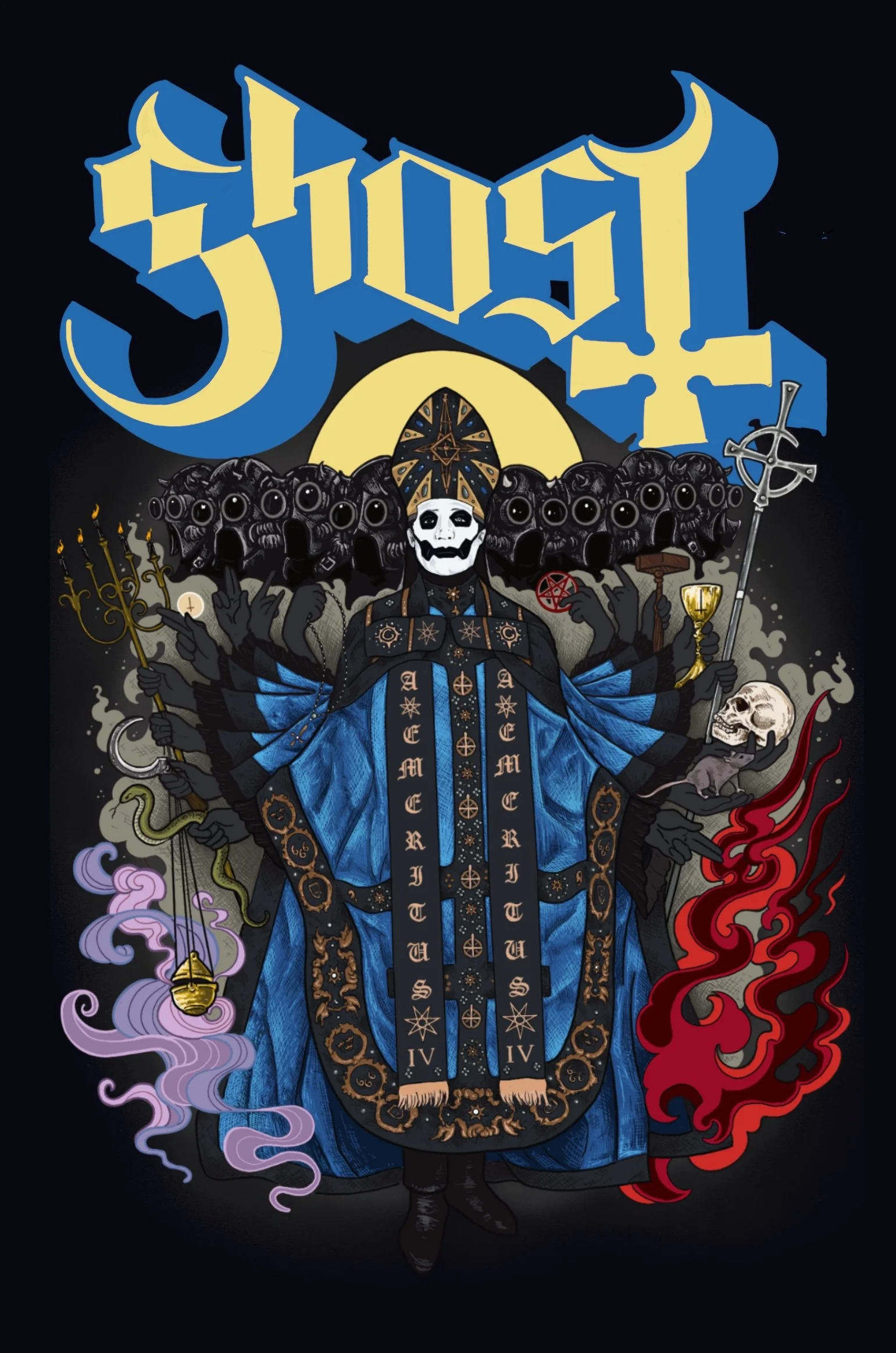
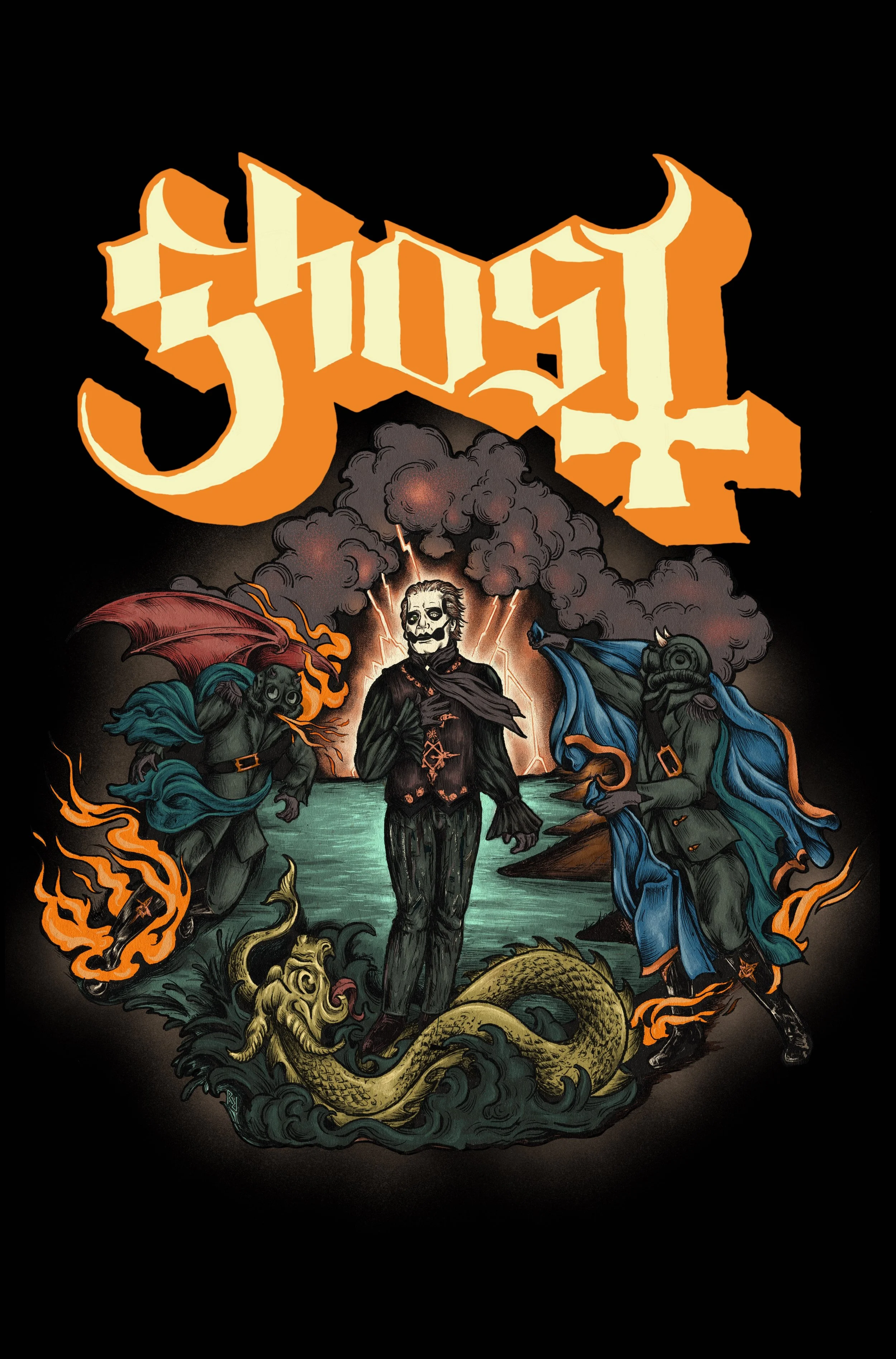
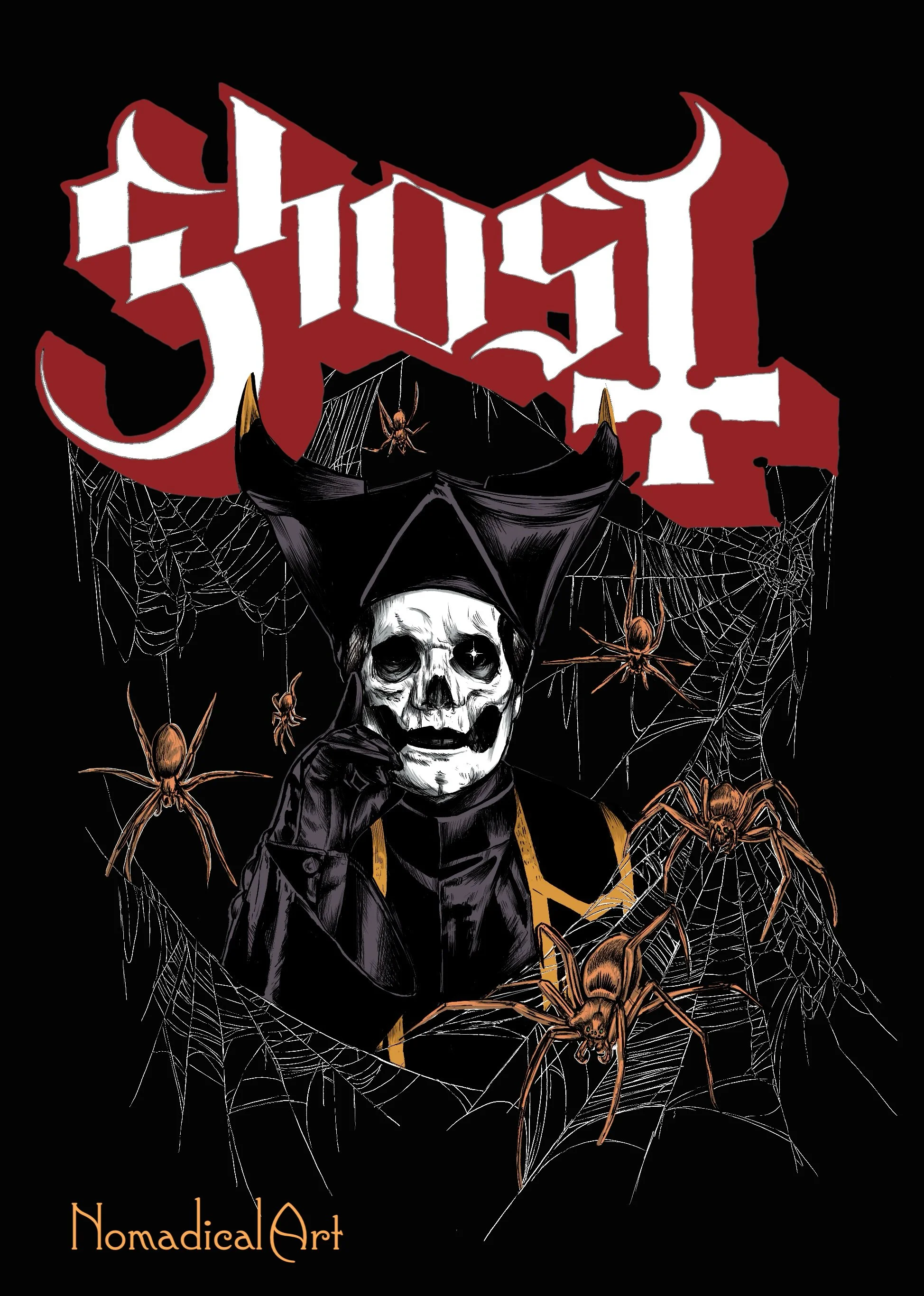
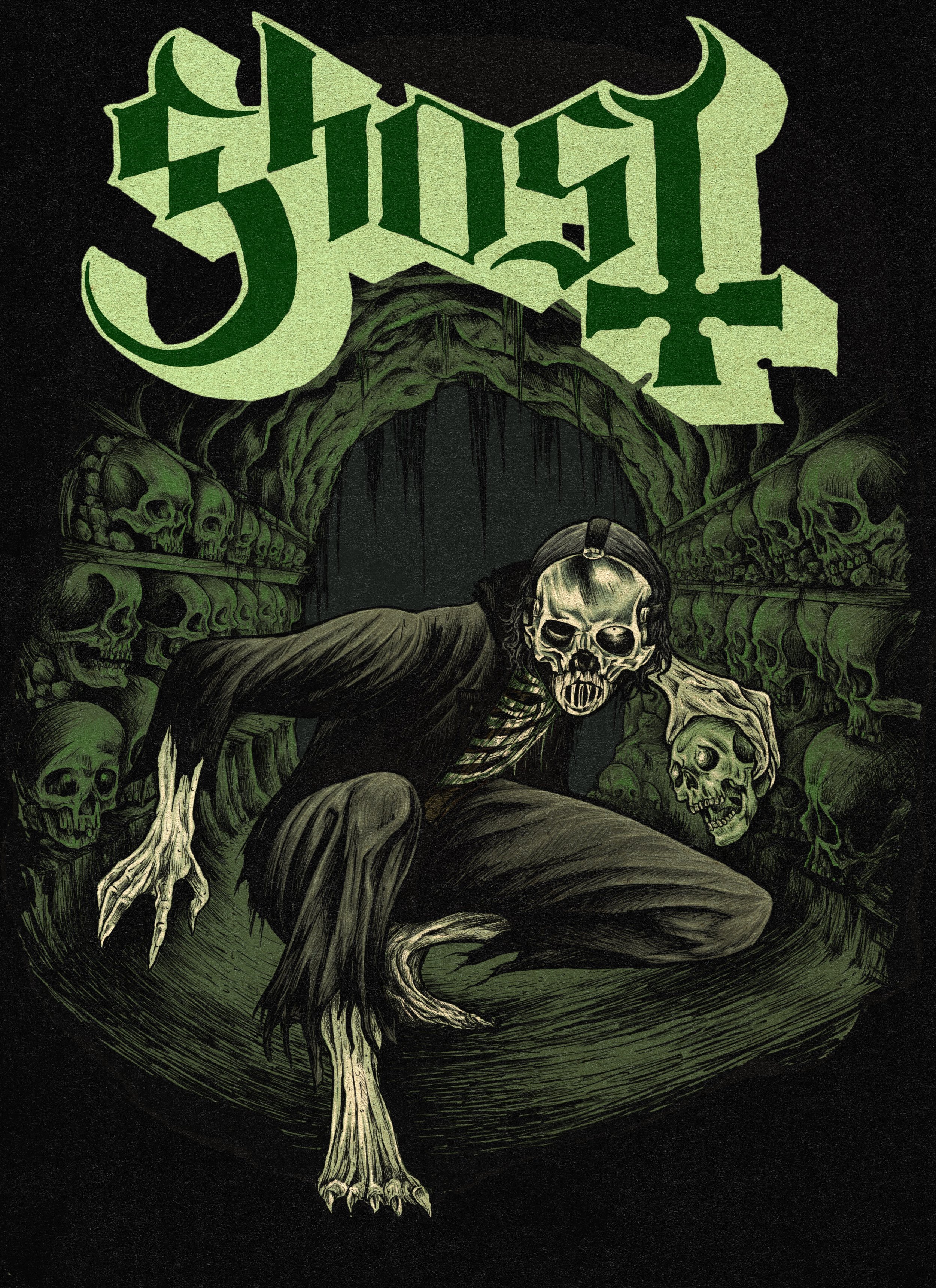
These are the four designs that have been published by Ghost so far. I do have a fifth design coming but I can’t share it until Ghost releases it for their line of apparel. The Mucha inspired design at the top right was my first design for them and has appeared as a car decal, t-shirt, hoodie and sweatshirt. The top left design was part of an exclusive bundle with Revolver Magazine. The bottom two designs were both exclusive designs on Ghost’s official website. Bottom left, a Friday the 13th special and the bottom right a special autumn season release.
Ghost apparel can be purchased from Ghost’s official website as well as other licensed dealers. I’ll name a few that I know of here. Amazon.com, Revolver Magazine, Backstreet Merchandise, Rock Off Europe, Rockabillia, Hot Topic, Metal Hammer, EMP.
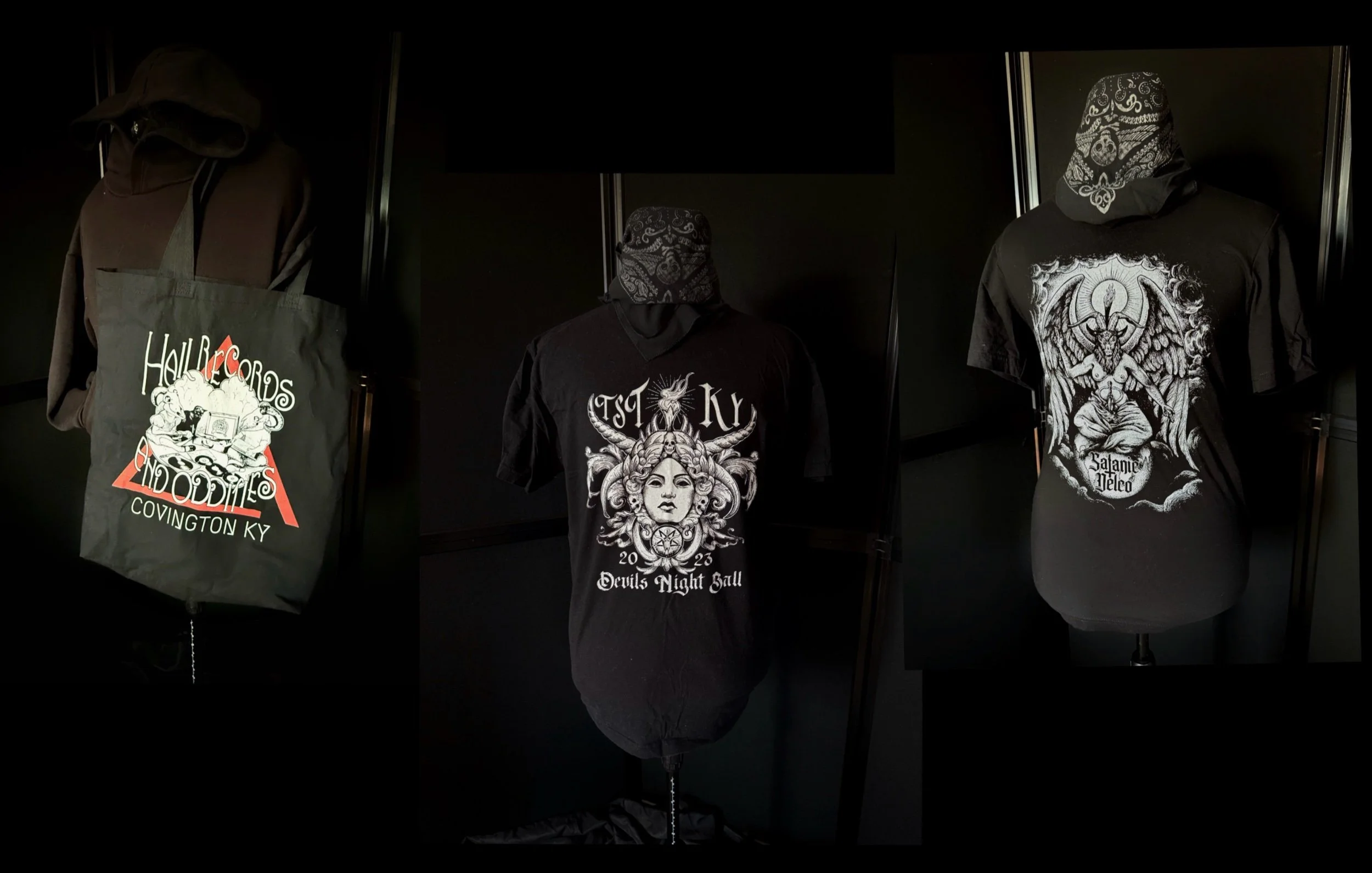
The following are designs I made for three different clients. Hail Records and Oddities has used my design on tote bags, stickers and t-shirts. The middle design was made for a masquerade ball in 2023. The design to the right for a non-theistic Satanic group called Satanic Delco that is located near Philadelphia.
My Journey into Printmaking
In 2024 and 2025, I delved deeper into the world of printmaking, reigniting a passion that began 26 years ago during my time at Northern Kentucky University (NKU). Back then, my focus was on relief printmaking, where I created large-scale prints using tempered masonite. With access to the university's press, I could easily work on a grand scale. However, after graduation, the absence of a studio and, more importantly, a press made it challenging to continue my artistic practice.
It wasn't until 2023 that I found myself in a position to revisit printmaking. I embraced linoprinting and woodcut relief printing, purchasing a small etching press and transforming a guest bedroom into a dedicated workspace. This new setup allowed me to experiment not only with relief techniques but also with etching—a medium I had only briefly explored in college. Looking back, I wish I had devoted more time to etching, as I believe it aligns beautifully with my drawing style.
Reintroducing myself to relief printing and self-teaching etching proved to be a challenging journey. I encountered difficulties with the tools, ink, and achieving the right pressure on my press. My expectations were perhaps too high, leading to moments of disappointment as I found that my creations often fell short of my vision. Sometimes there is true beauty in unexpected outcomes but, I struggled to reconcile my aspirations with the outcomes I was producing. Ultimately, I realized that the process itself carries its own value, even if the results don’t always match my expectations.
Currently, I’ve decided to take a break from printmaking. I envision returning to it in the future, but for now, the visuals swirling in my mind are urging me to explore different mediums. They seem to demand a canvas that better aligns with their essence.
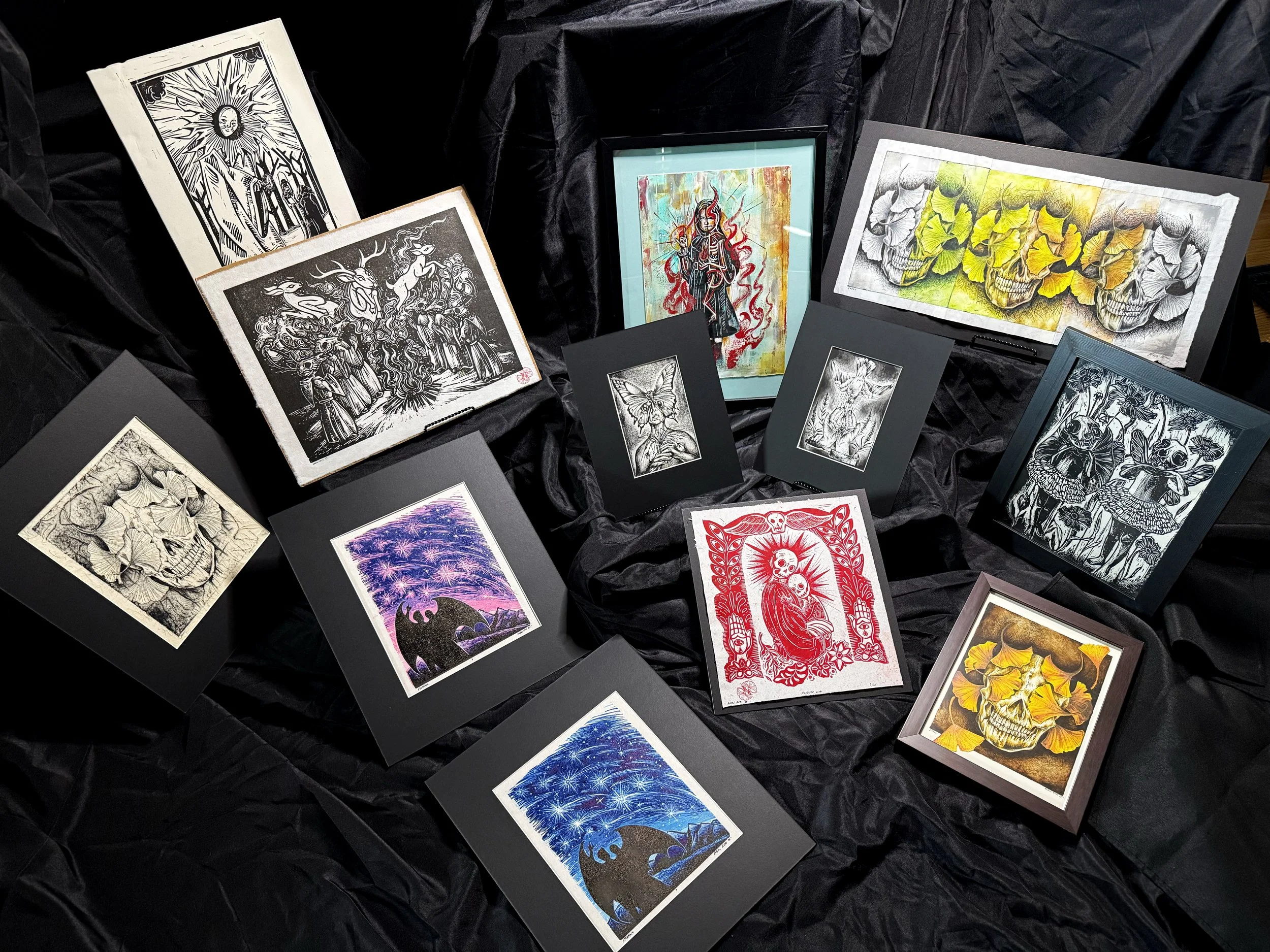
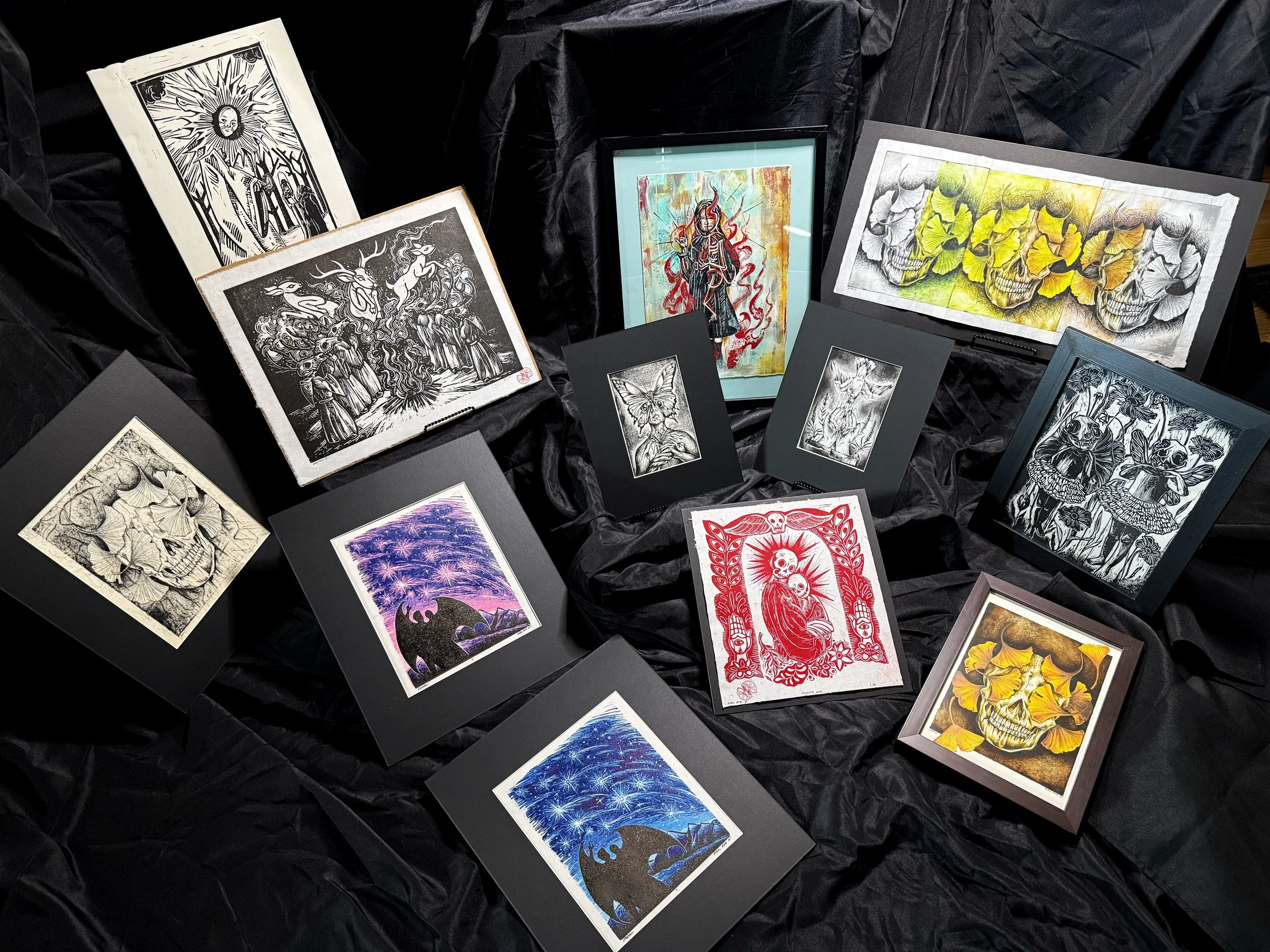
The following are mostly all the prints I made, both relief printing, mono printing and etching.
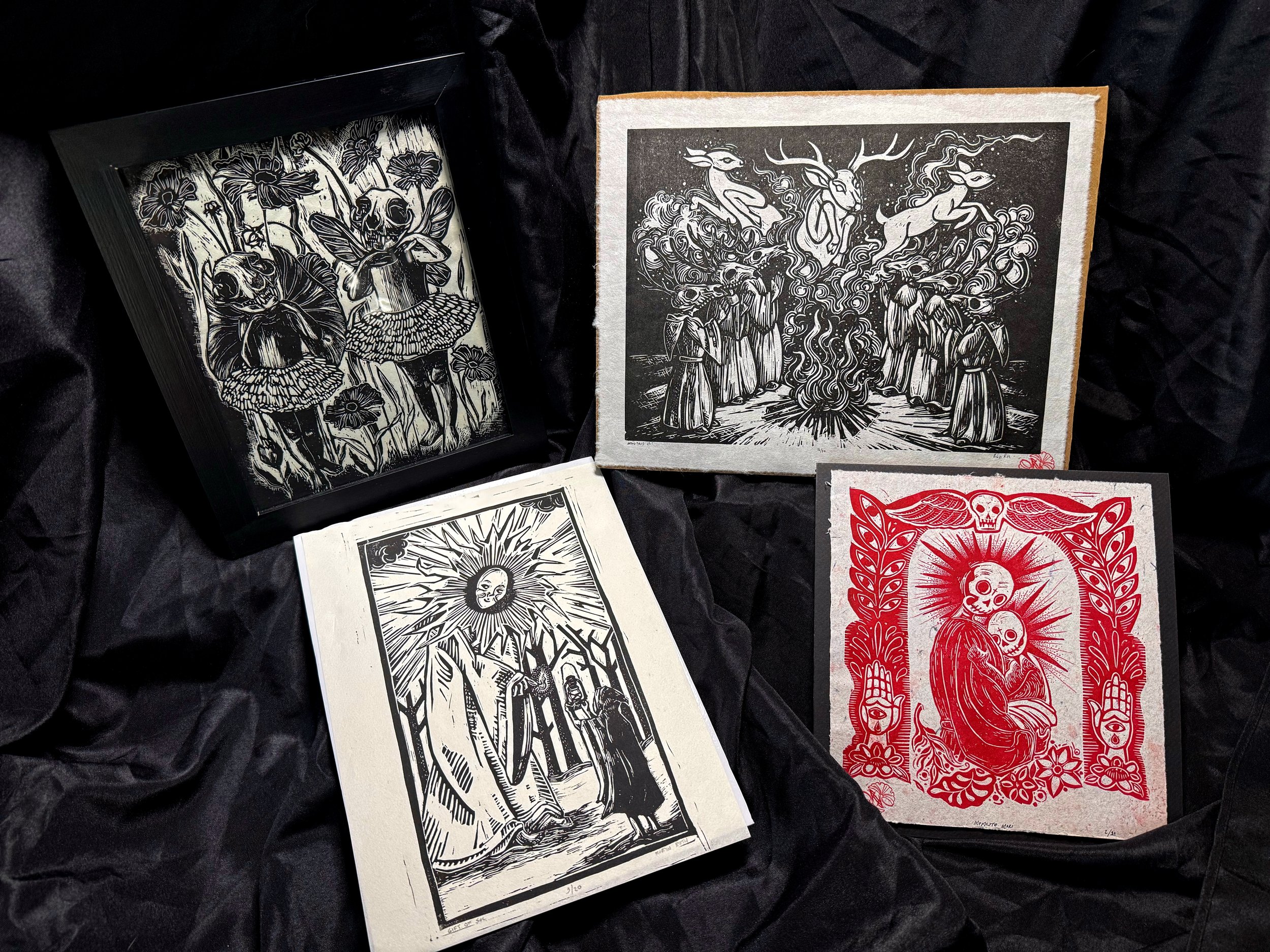
Pictured are a few relief prints that were made on linoleum, Masonite or wood.
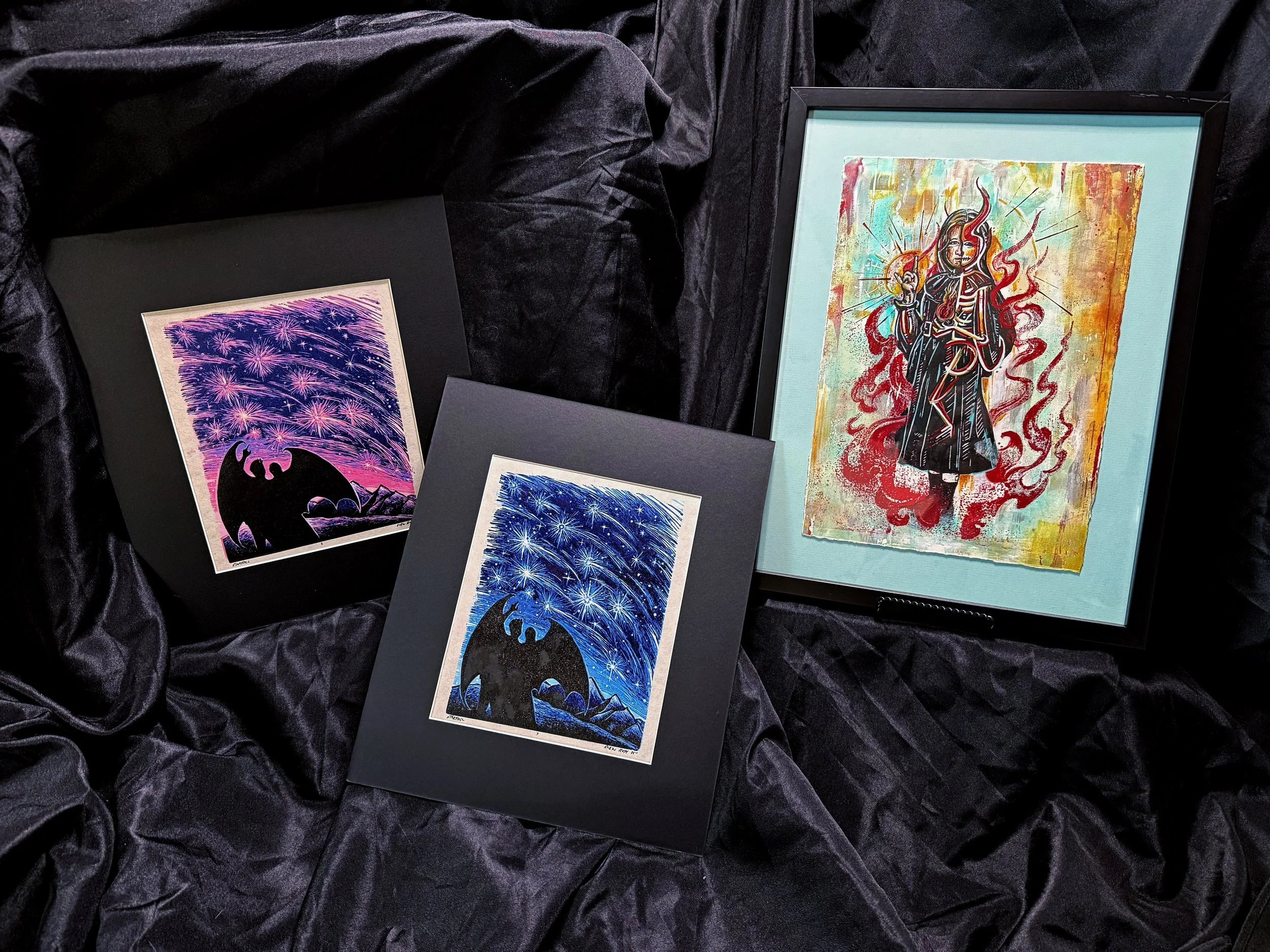
The three prints pictured are different techniques but proved to be the most difficult to execute. The two prints featuring a starry sky are reduction linoprints that have about 5 layers each. The difficulty with these was primarily over or under inking the linoblock.
The framed print is a monotype print that I made using a woodcut and a gelli plate. My biggest struggle was getting a successful transfer of the image from the gel plate. I probably threw away 15 prints before I had any success. I did paint into all of the prints pictured to enhance and make them more interesting.
Etching was hard for me. I only made one etching in college and it was just an introductory piece just to say I tried it. I had to learn on my own and rely on books and YouTube to try and accomplish anything.
If you are not familiar with the process you scratch your design into a copper or zinc plate and then use an acid bath to bite the image deeper into the plate so that it holds the ink when you print. Unlike relief printing when you ink your plate you wipe away the ink on the surface and the remaining ink is pushed into the lines you etched. There are so many moving parts to getting a good print and I still haven’t truly achieved it. The press has to be positioned in such a way, the paper has to be damp and the etch in the plate has to be made in a way that it shows up when you print. I had problems with everything.
What you see in this photo are good moments for me but I did have to doctor all of them by painting or drawing into them. In the future the goal would be to only have to do minor retouching or no touch up at all.
What is Digital Drawing?
Digital drawing involves creating artwork on a tablet or iPad using a digital stylus or Apple Pencil. It typically requires applications like Procreate or software such as Adobe Photoshop to produce detailed and intricate designs.
My journey into digital drawing began with the intent to design tattoo appointments. Initially, I focused solely on creating line art for stencils, but never pushed myself to create anything more detailed. At first, I did not like how the texture of drawing onto an iPad felt leading me to believe that creating in this way was unlikely. However, during the COVID-19 shutdown, I began to explore this medium more deeply and, by early 2022 I produced my first complete artwork as part of the Majestas series.
In the beginning, my drawings were predominantly in black and white. My unfamiliarity with Procreate made the process challenging; I was never formally trained to making art on a computer so I didn’t know basics skills like how the separate layers. It wasn’t until I designed a piece for the band Ghost that I truly grasped the techniques and began to experiment with color.
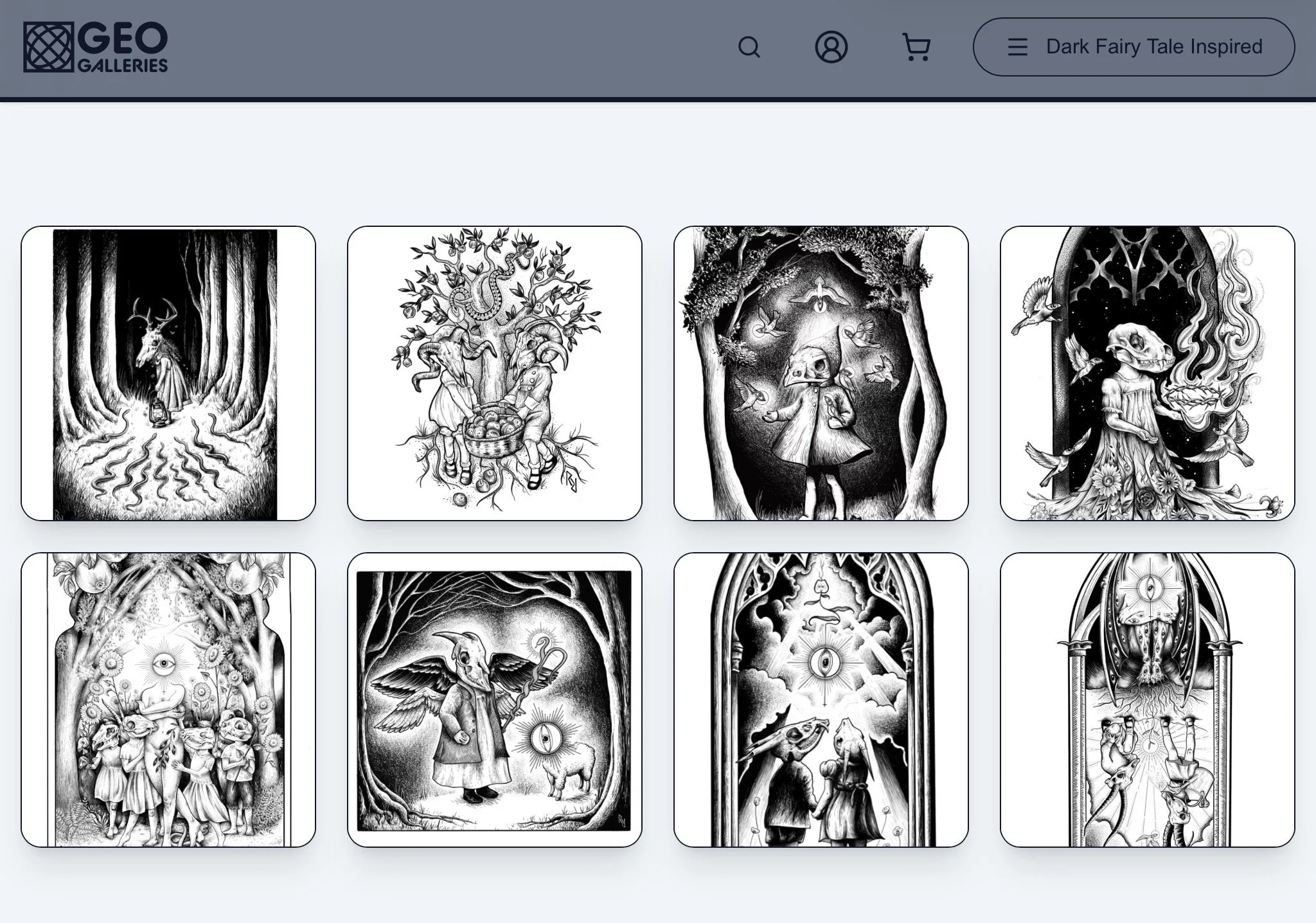
Reflecting on my progress, I’ve come a long way since that initial black and white drawing of two goat-headed children stealing apples from a tree. To date, I have completed over 60 drawings, and I genuinely believe that working in the digital realm has significantly enhanced my skills as an illustrator, transforming my passion into a viable business.
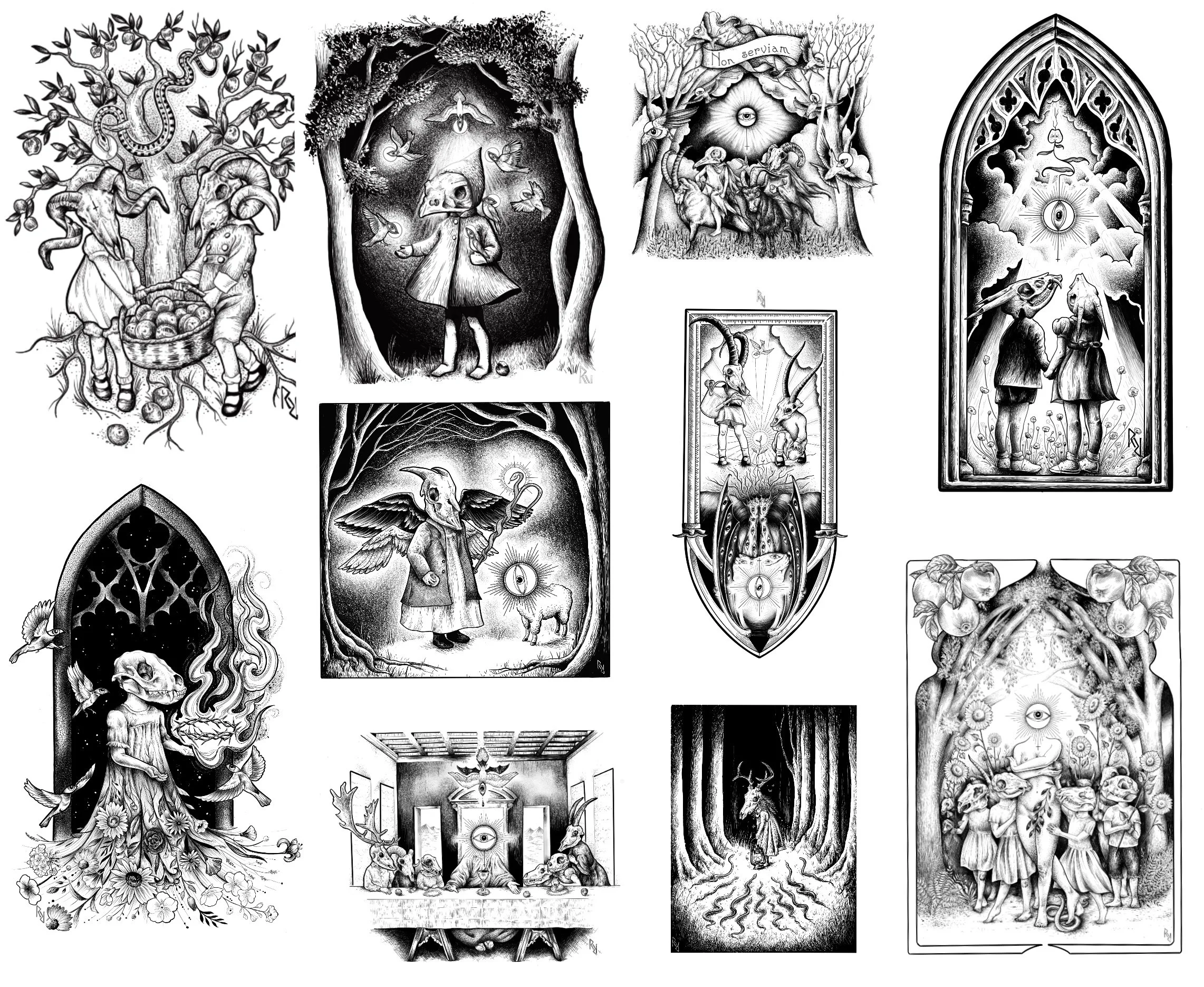
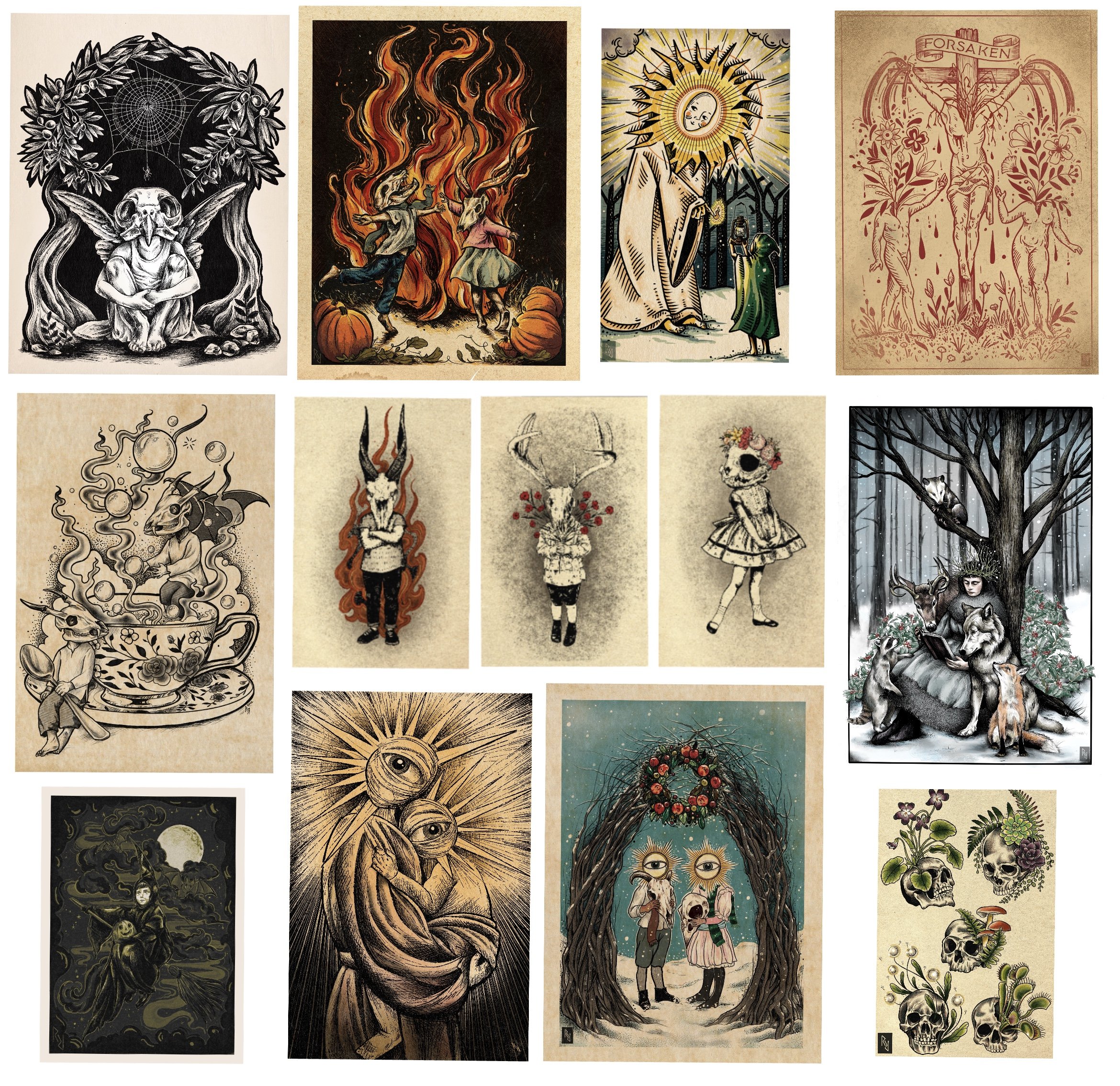
Majestas was the first of my digital drawings. I only worked in black and white as I was trying to portray the imagery like something you might see in an old illustrated story book. I also could not figure out how adding color worked because I was yet to understand the technique of layering and proper use of saturation tools.
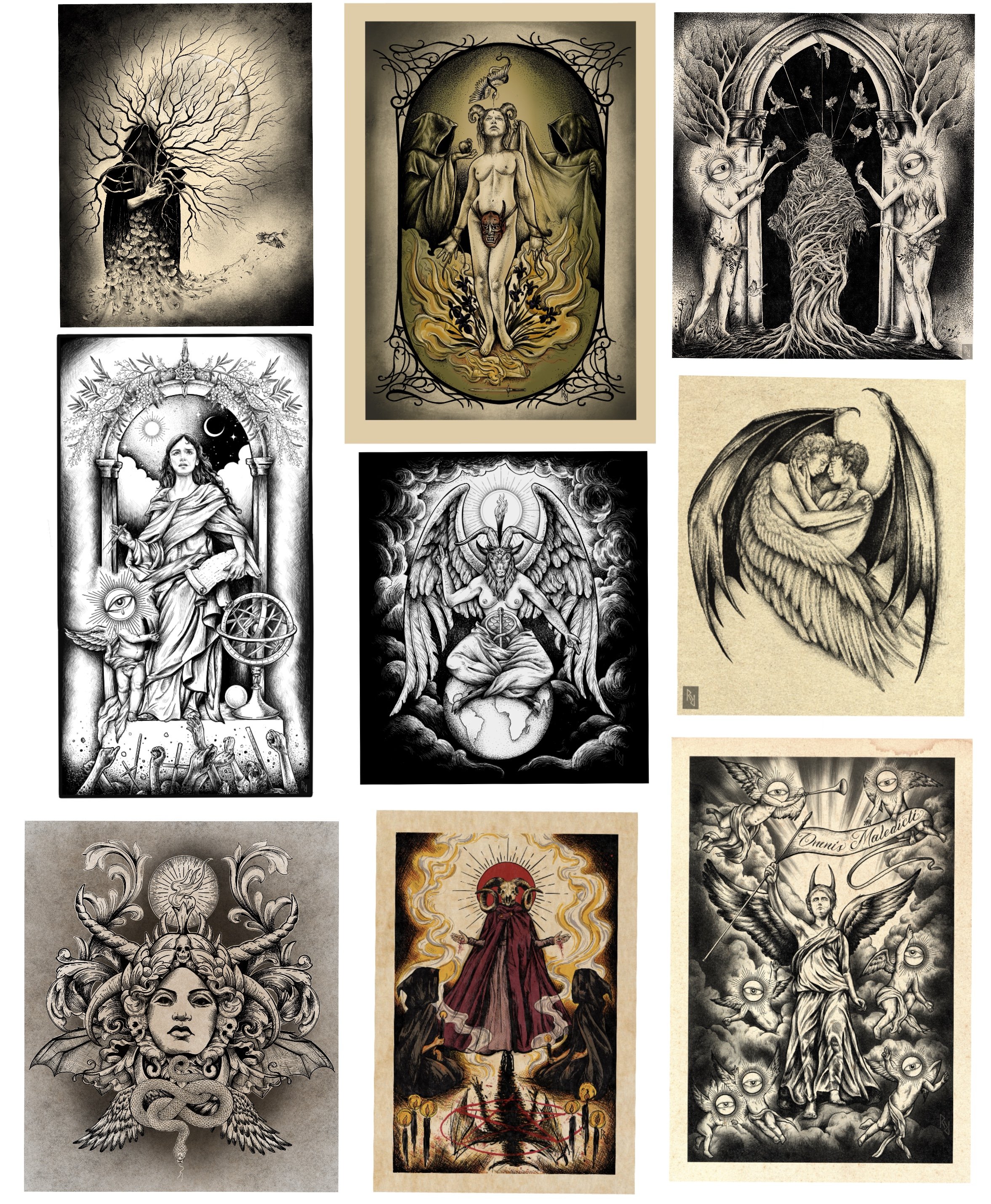
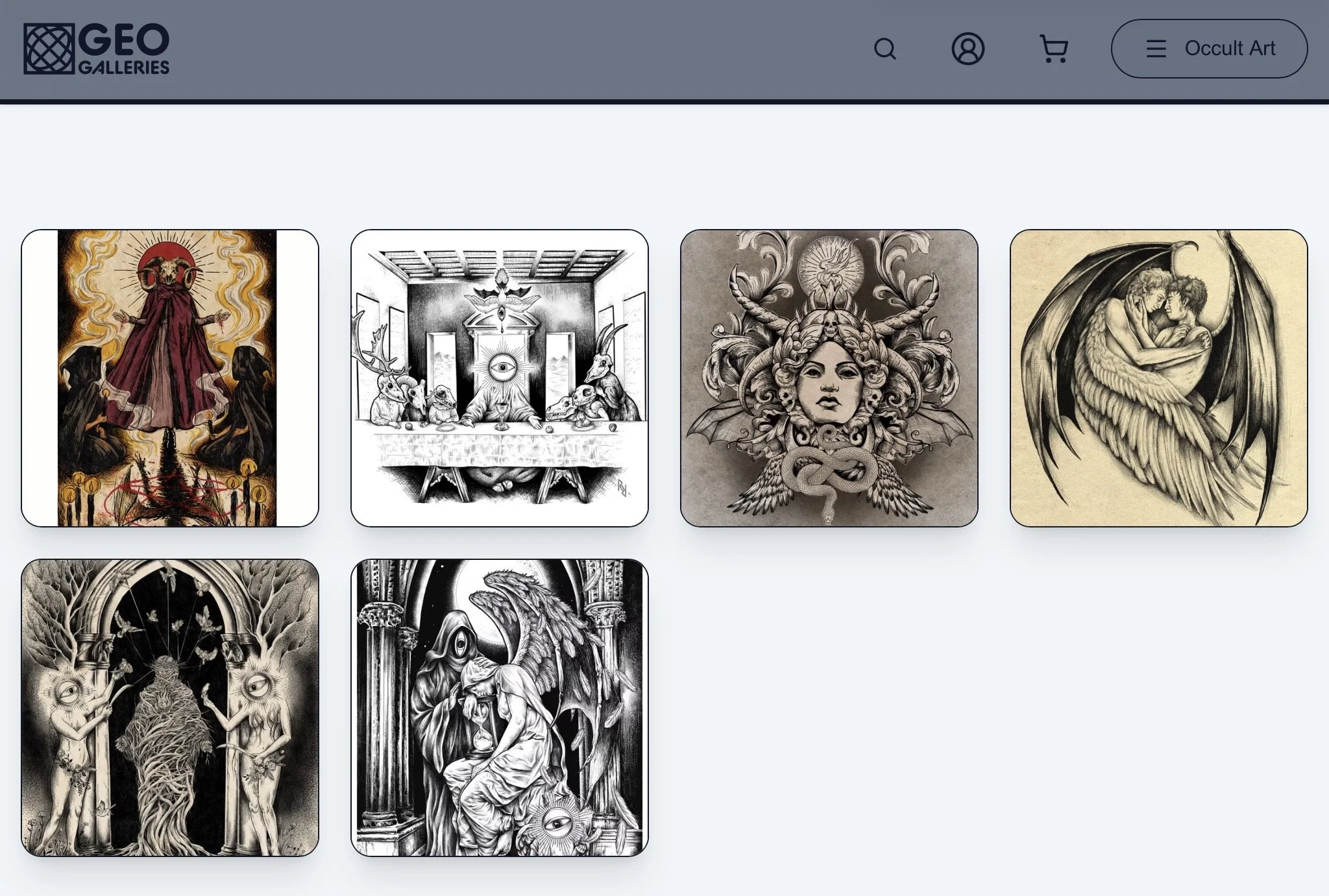
This small collection of occult based themes. A couple of these designs were commissioned, notably the Baphomet in the center.
One artwork serves as a tribute to Hypatia, the renowned female Roman scholar who met a tragic end at the library where she worked. Her death symbolizes a pivotal moment in history, marking the decline of humanity’s interest in science and heralding a shift towards the Dark Ages and a resurgence of superstition.
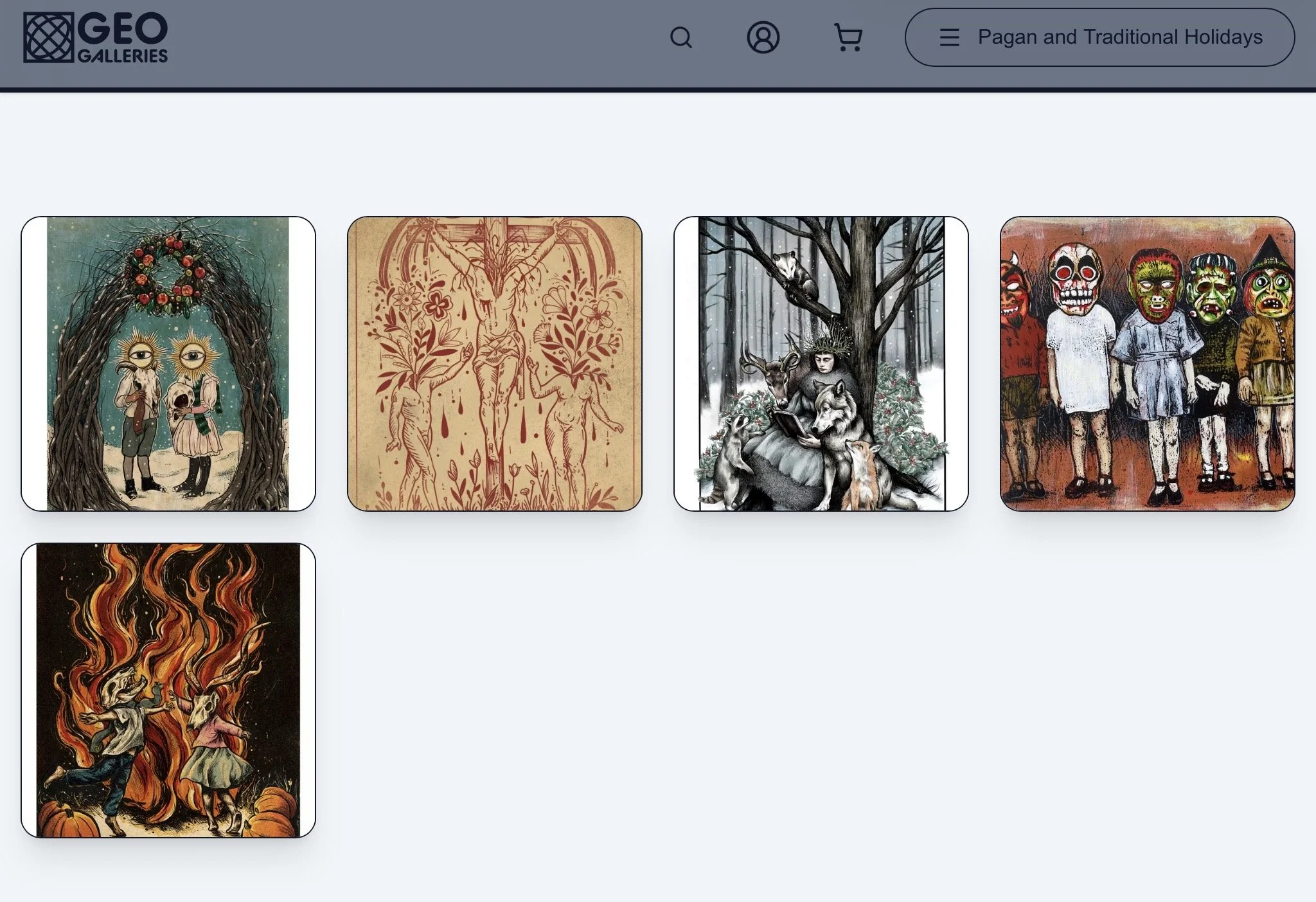
A few of my holiday themed designs, mainly Halloween and Christmas/Sol InVictus. I enjoy offering an alternative to standard holiday art.
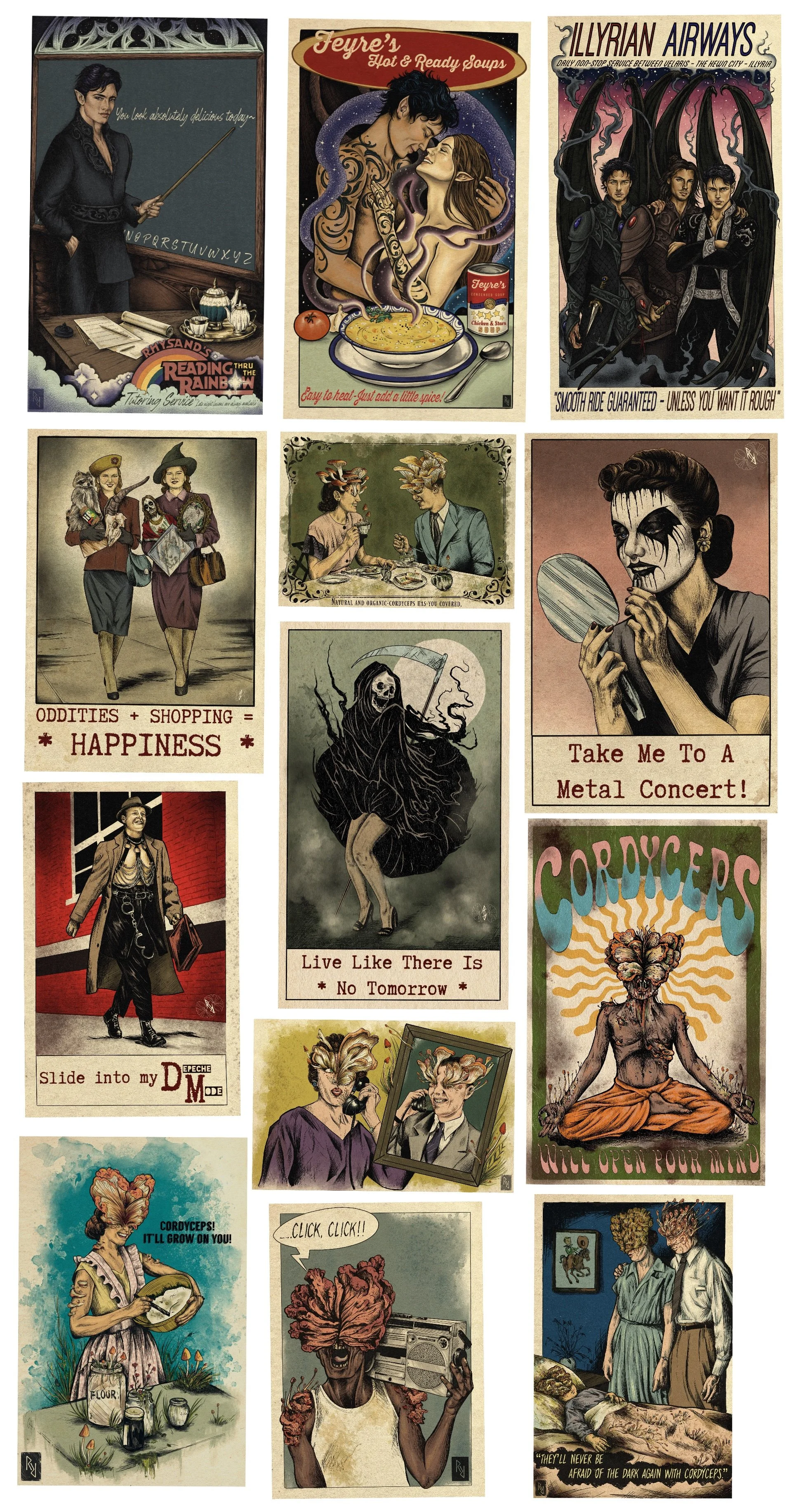
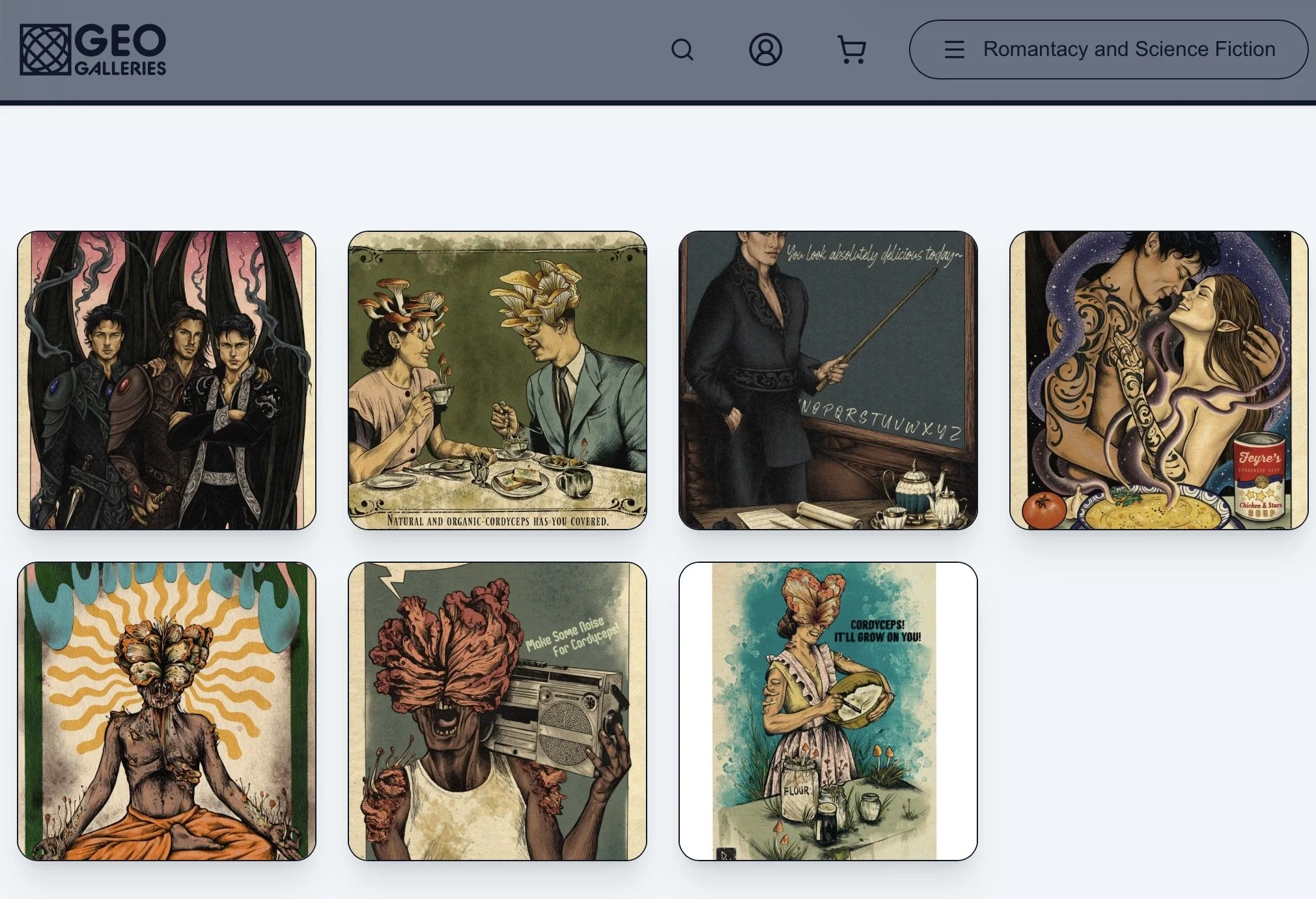
These are all my most popular digital creations aside from the Ghost artwork. All pieces represent my interests at one time or another like for example I really loved, The Last Of Us series. I’m a fan of post apocalyptic stories and it was just easy for me to create something fun out of a very dark terrifying concept.
You can see that I also enjoyed the book series by Sarah J. Mass called, A Court Of Thorns and Roses. I made fake advertisements that highlight specific scenes or characteristics in the stories. I get the best reactions from my viewers when I sell these at conventions. It starts off as a blank stare to a glowing smile and then giggling. All three are great sellers.
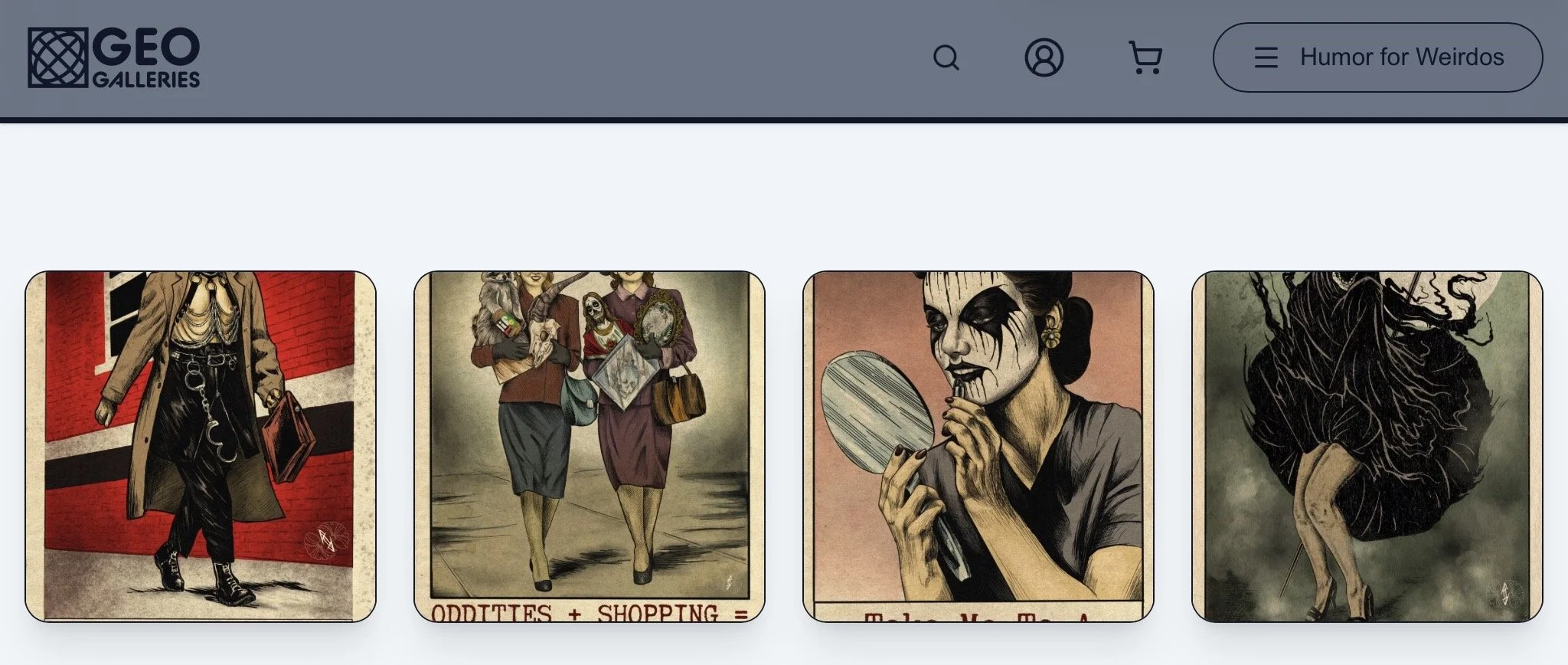
Lastly, as I delved deeper into the oddities market making illustrations to compliment that world seemed appropriate and they were a whole lotta fun to make. My favorite is the corpse paint lady.
Drawing in Pen and Ink
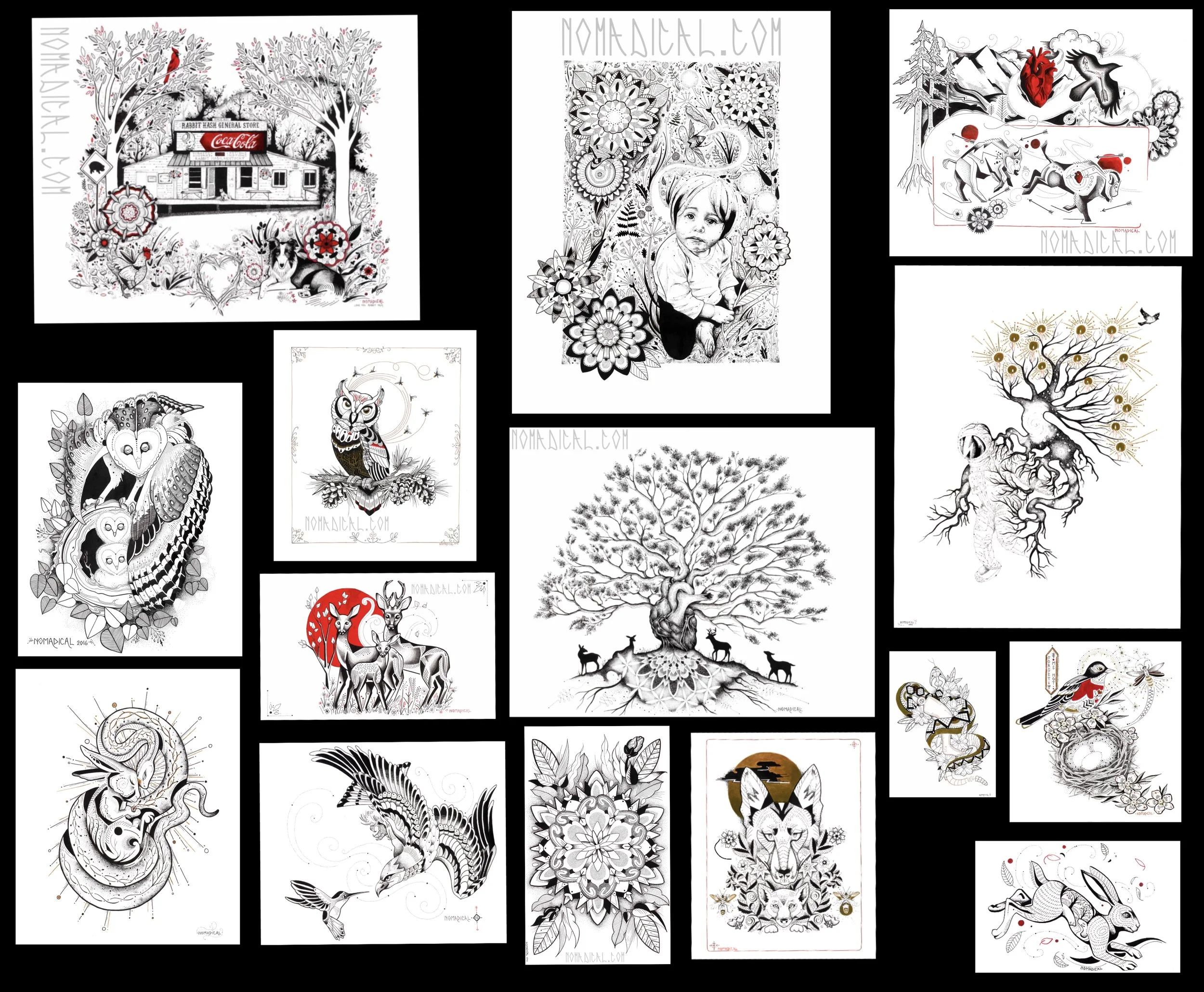
This gallery is devoted to the time when I stopped painting and began drawing on bristol paper. My tattooing was starting to shift to black and grey styles that focused more on stipple style shading. The influence of technique in my tattooing is clearly visible in the drawings you see.
Many of these drawings have sold and found homes long ago. My most famous drawing from this time is called, Love You Rabbit Hash. It featured a drawing of the famous landmark in Rabbit Hash Ky of a general store. I made it right after the store had tragically burned down and had silkscreen prints made to help raise money for its restoration. The original drawing was purchased and now lives in Colorado somewhere. Rabbit Hash General Store was rebuilt and restored to its original structure and continues to thrive to this day.
Drawings are on bristol paper and made with pen and brushed ink. There is a bit of Native American art influence in these works and also strong influence from tattooing culture.
I was still using Bristol paper and pen to make my drawings but moving away from the highly stylized flat shapes to make my images. I had more preference for natural looking animals but doing the mark making in a way that was uniform and patterned.
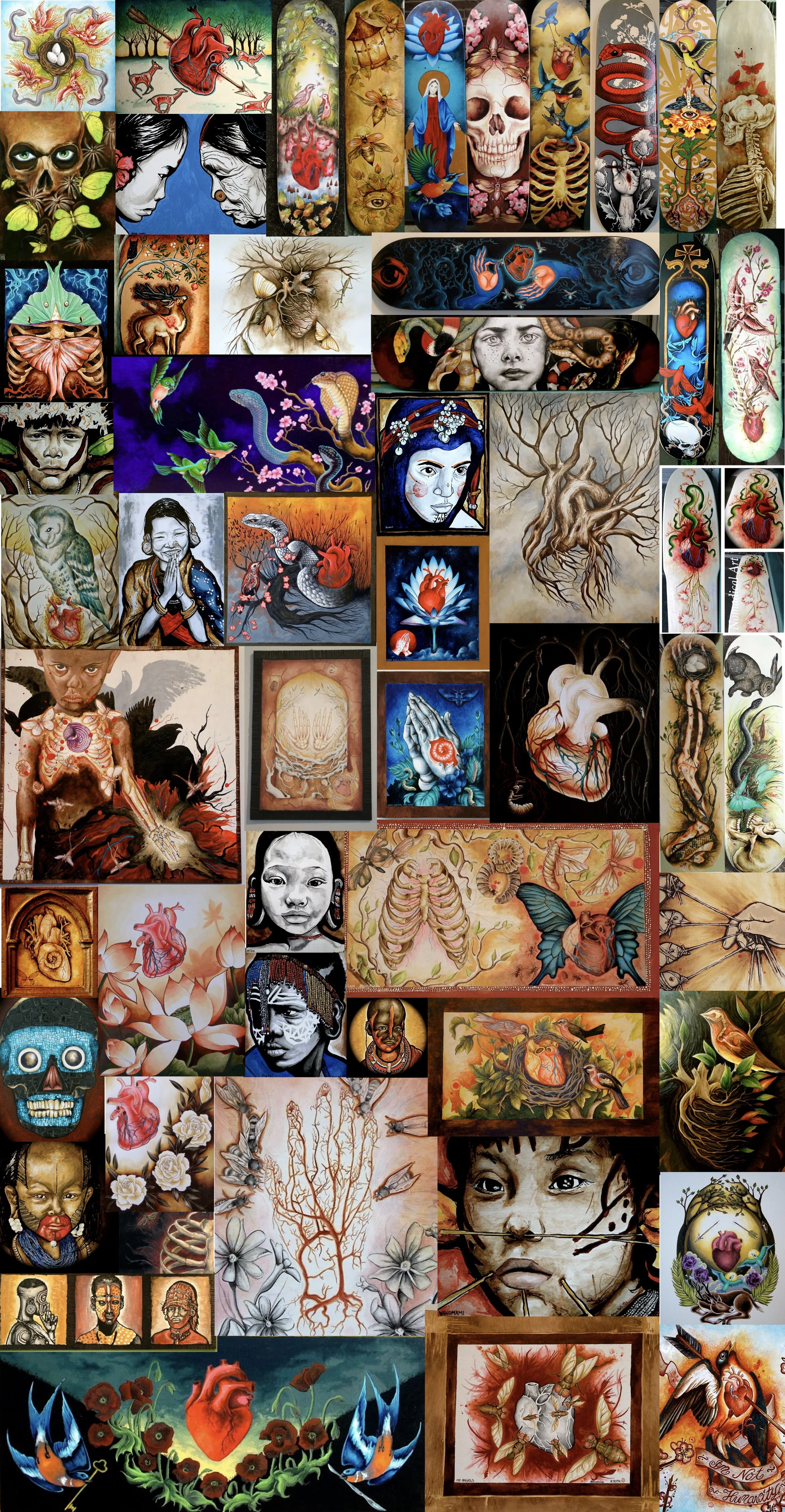
When I sat down to redo this gallery, I didn’t realize how much work I actually had. I had to dig through files and various platforms where I had posted the work to gather everything here. Creating a large collage seemed to be the best way to display it since I am no longer in possession of any of this artwork. I wasn't great at taking high-resolution photographs back then, and if I remember correctly, most of these were photographed with a basic camera, not a phone. Given the differences in lighting, definition, and resolution, this was the only feasible way to share what I created ages ago.
At that time, I was at the beginning of my tattooing career while also actively playing bass guitar in a band. I’ll share another gallery showcasing some of the album covers I did for several local musicians during that period.
Looking back at many of these paintings, I can see how influenced I was by the tattoo artists I met and collected tattoos from. I remember wanting so badly to have the skills to create tattoos like those of the artists I admired. I was new to the field, and platforms like Instagram or YouTube didn’t exist yet. I had to learn by studying books, magazines, and, of course, observing the tattoo artists I was fortunate enough to be around. I used painting as a way to practice how bold-colored tattoos were shaded. Ultimately, my tattooing took a different direction that aligned more with my drawing style, which I consider a positive outcome. The tattoo artists I admire have mastered their techniques, and those styles belong to them.
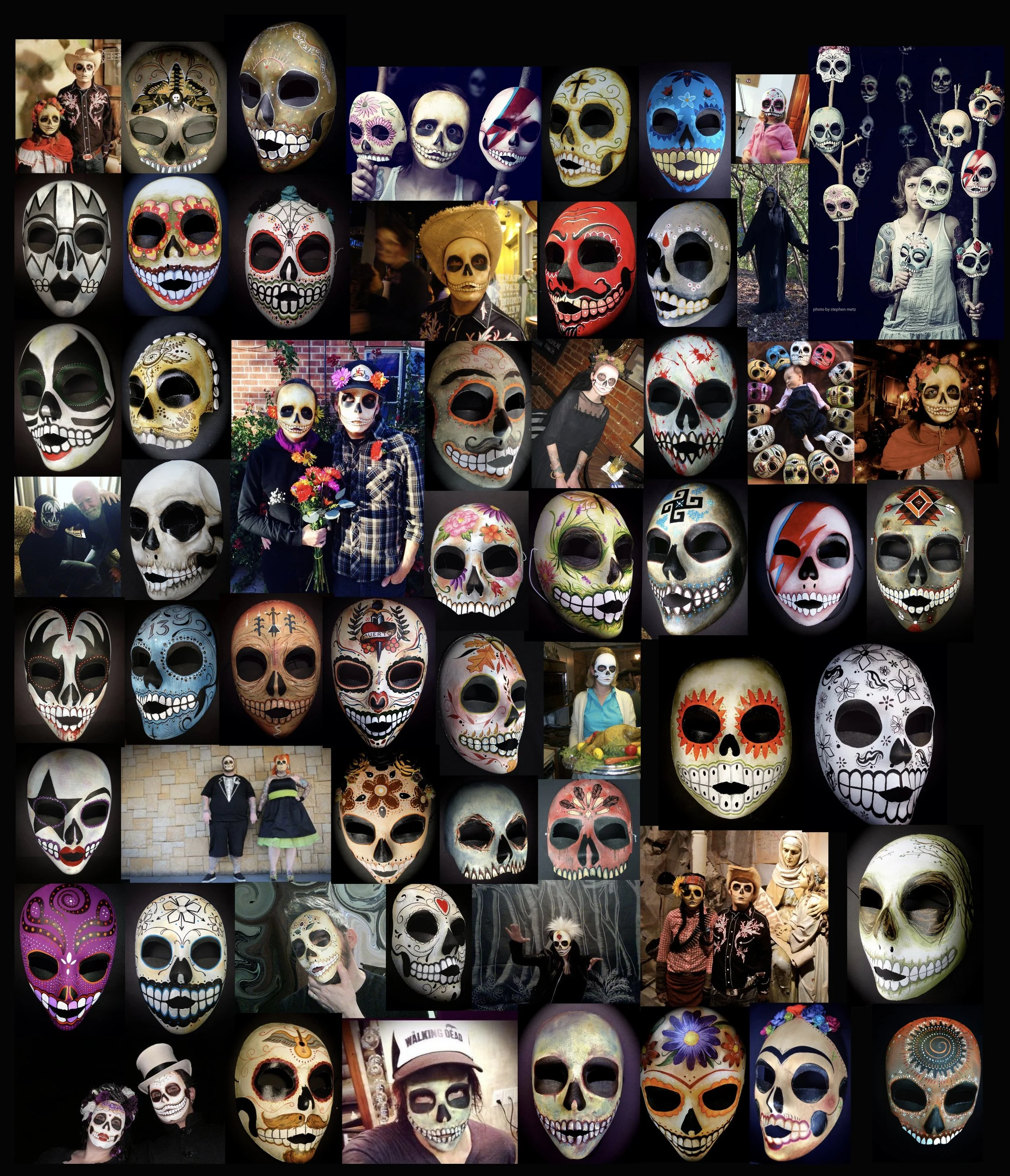
Around this time, I also painted on Venetian masquerade masks, doing a set every year from 2012 to around 2016. I started making them for others after creating two for myself and my husband. We were invited to a Día de los Muertos exhibition and celebration at an art collective in Columbus, Ohio. I was encouraged to submit artwork for the show, and dressing up in theme was part of the experience. The reactions we received to the masks were very positive, with many people asking—because the room was quite dark—if we had painted our faces. This encouraged me to try making more masks, with the first few being made only by request.
These masks were very successful, and I probably could have continued painting them, but a few factors led me to change my mind. I didn’t make the Venetian masks myself; I ordered them from an Italian mask maker. Initially, it was easy to source these masks, but eventually, I could no longer find Italian-made ones, as they had all been replaced with lower-quality masks manufactured in China. While they were cheaper, as you can probably guess, cheaper usually means poor quality. I would order a dozen or so masks, only to find that the eyes were crooked or the holes didn’t align properly with where a person's face would be. They didn’t mold to a person's face as perfectly as the Italian-made ones did. That marked the first strike against continuing this project.
Secondly, this issue was rooted in cultural sensitivity. I always aimed to avoid making my masks resemble traditional Mexican designs. However, the truth is that when you paint designs on a skull face, it inevitably evokes the imagery of a Day of the Dead mask. As people became more aware of who was creating these masks, there was a growing concern that I might be profiting from a culture to which I don't belong.
I painted these masks out of love for the tradition and symbolism of the Day of the Dead celebration, as well as a deep interest in humanity’s relationship with death. Nevertheless, I felt it was best to respectfully conclude this project before it escalated into confrontation. The last thing I wanted was to turn something meant to be positive into a controversial issue.
Interestingly, I never received negative feedback from individuals of Latin American heritage; their reactions were quite the opposite. I am at peace with the series coming to an end; some things are simply meant to be that way.
I wanted to try and photograph a few of these in the same way I did the printmaking and early drawing gallery BUT I’ve sold everything that you see in the collage. I regret not taking better high quality photographs of them but I didn’t really think about the future back then. I was just thrilled that many of you loved my work enough to own it. I hope after all this time that my work is still with you or that you have passed it on to someone else that feels connected to it.
A photo collage of my most favorite masks that I painted along with a few fans wearing them for me.
I used blank Venetian face masks with gesso and acrylic paint to create my faces.
I had my daughter in 2014 and I was making these masks at that time. It was a good time to make art like this when I could position her on my lap to nurse while I painted. I don’t think I would have made any artwork otherwise.
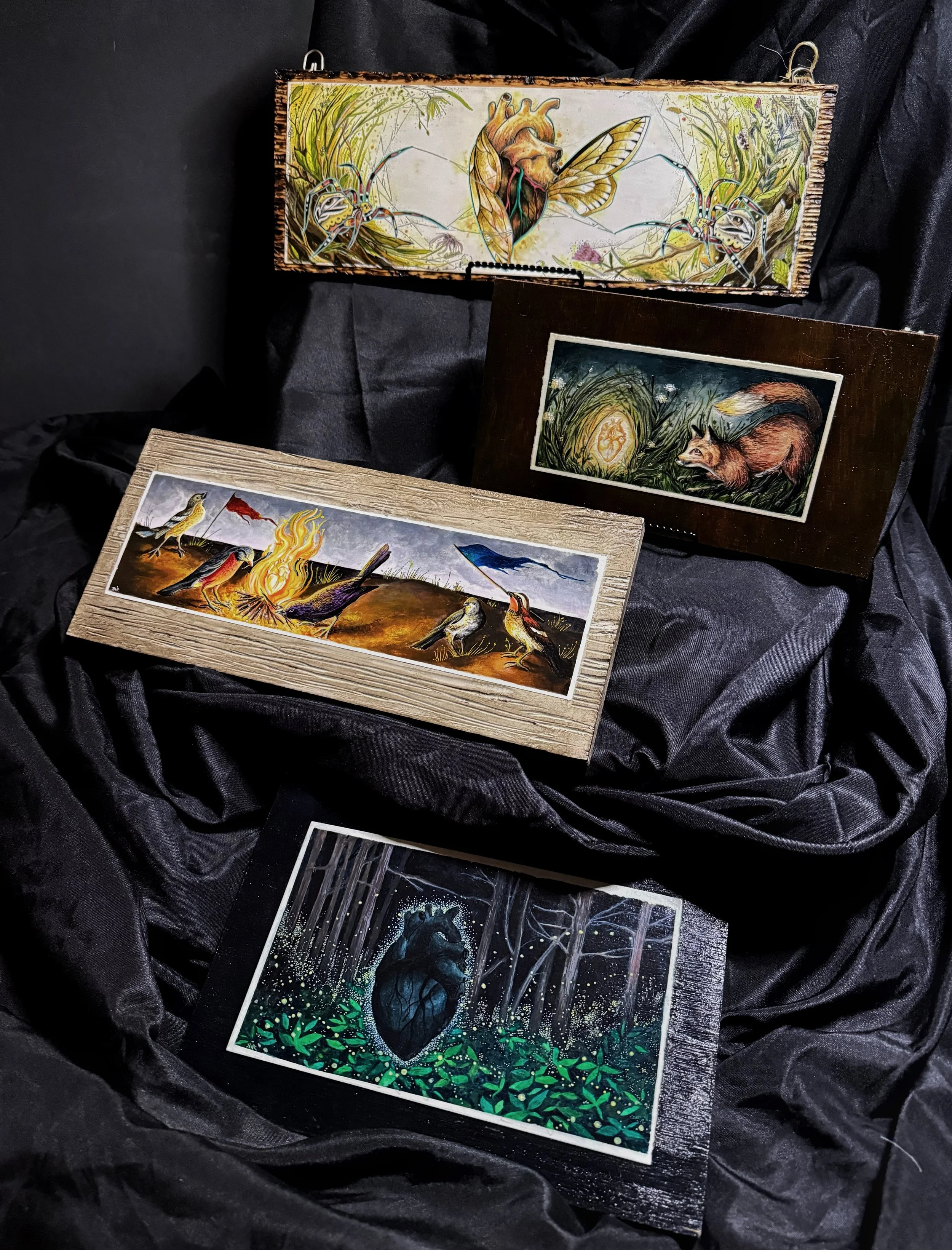
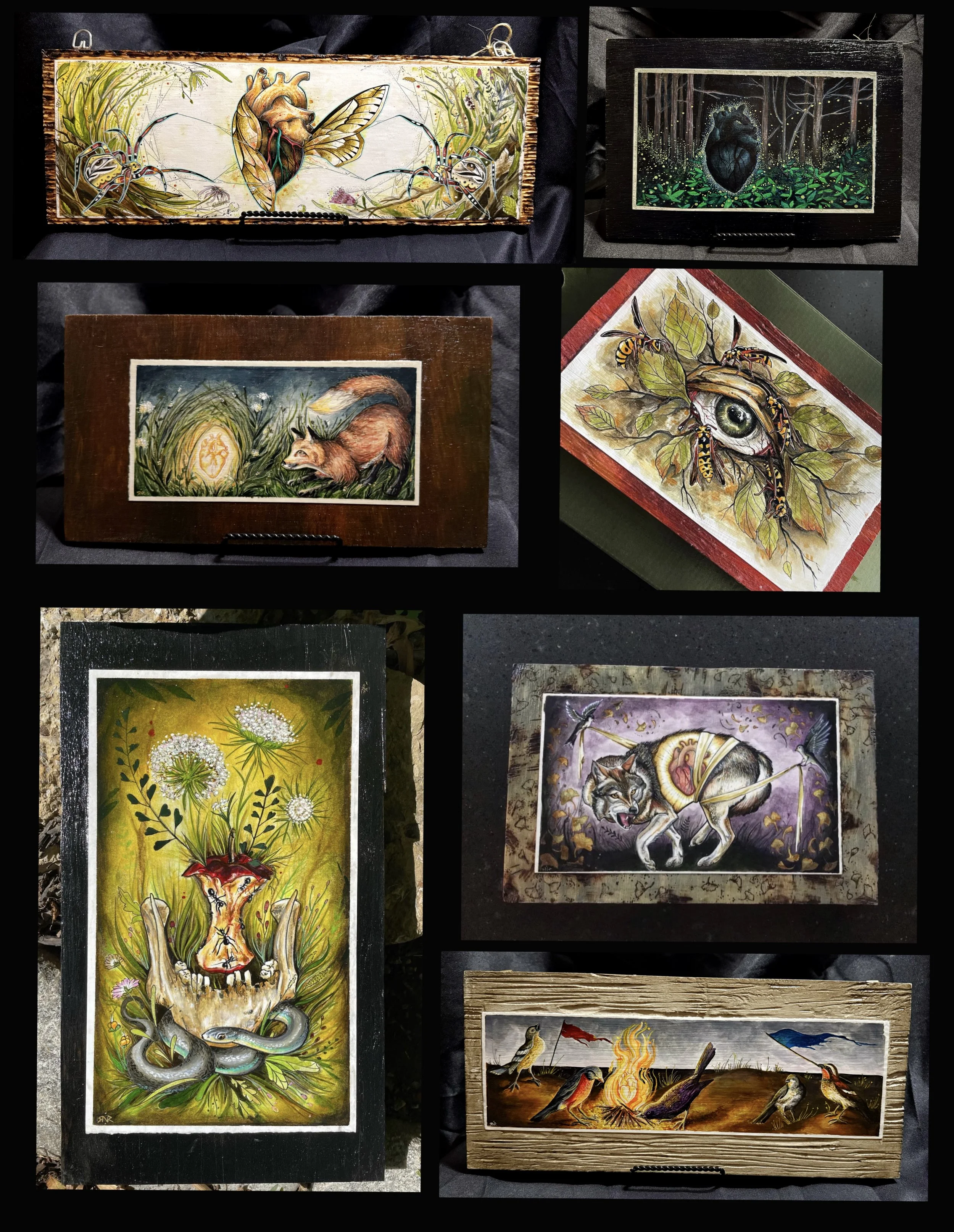
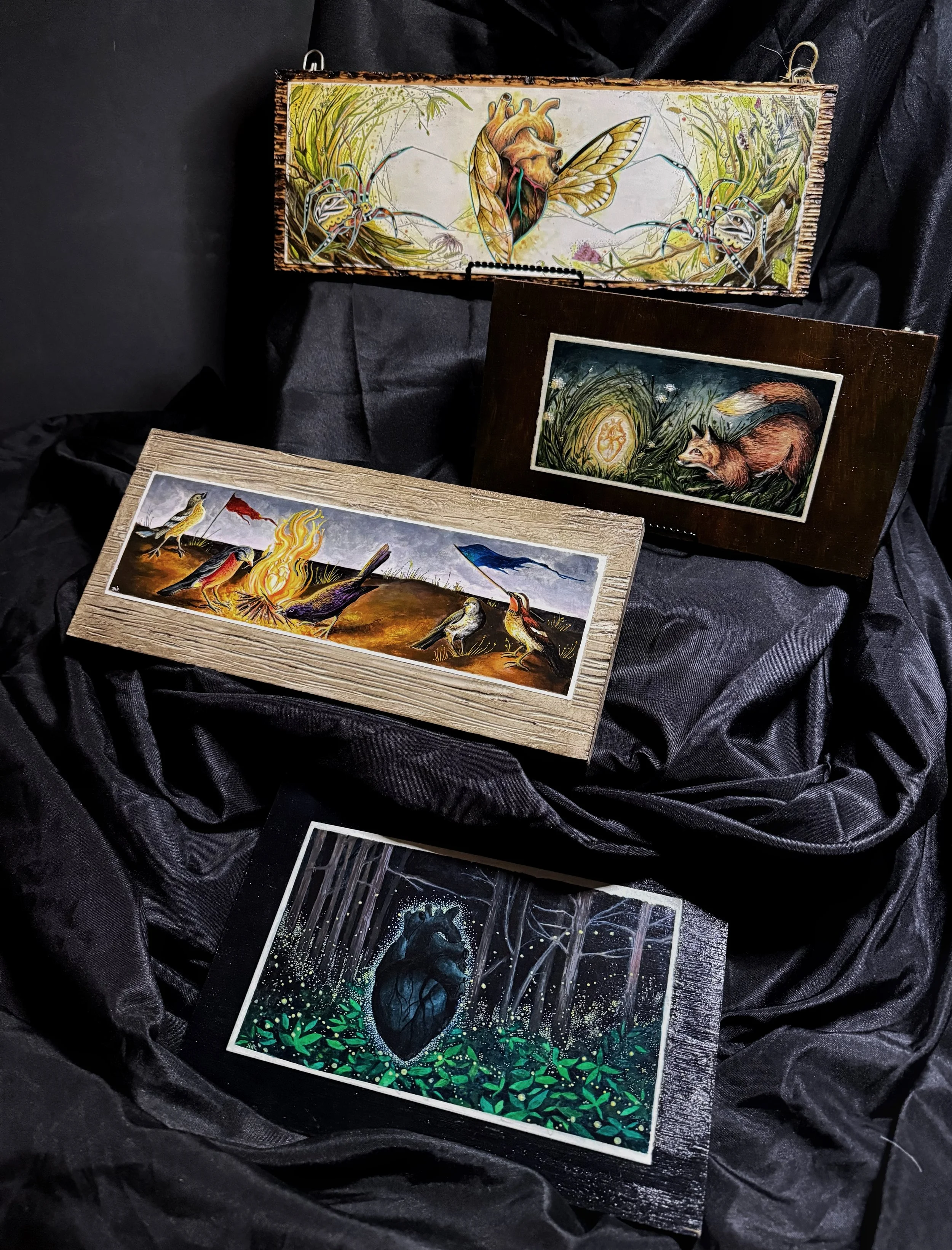
I also refer to these as the Covid-19 paintings because this is pretty much what I did with my time while my job was shutdown during the pandemic. They are all small paintings that were painted on bristol paper with acrylic ink and then mounted with an acrylic gloss medium onto a piece of plywood.
I’ve sold four out of this series with only one that I’m holding onto. The Lantern - which has a fox in the artwork is not for sale but I do make prints of it for purchase.
Ghost Story
I often receive questions about my involvement with Ghost, so I thought I’d share my experience here. A few want to know how to send designs of their own and while I certainly do not want to be a gatekeeper I also have to stay somewhat quiet about it in order to keep the people involved from being completely overwhelmed with submissions. If you are here and reading this you should be able to figure out how to send designs by the end of this story. First off- I do not communicate with the mastermind behind Ghost, Tobias Forge, and I have never met him, even at a meet and greet. I’m a fan, just like you.
I have been a professional tattoo artist for 20 years, and my side hustle involves creating art and illustrations. While I hold a BFA in printmaking and illustration, I am not a graphic designer. I was never contacted by Ghost or their marketing team to create designs for the band. The first design I made, titled Mondo Mucha, was created for fun, with the intention of making prints to sell to fans. However, I wanted to get permission from the band to do this since I was putting their logo on the artwork.
Someone who runs a Ghost fan page kindly guided me on where to contact for permission. I reached out via email but didn’t hear back for about two months. I assumed my email had gone unnoticed, so I began reproducing the artwork, as I saw a lot of fan art for sale on sites like Etsy and worried that if I didn’t act, someone else might. Out of respect, I sent one more email, and a week later, I received a response. To my surprise, the person said, “Hey, sorry for the delay in responding; I’ve just been very busy.” They informed me that while they couldn’t grant permission to sell the art on my own, they found my design compelling and suggested I make some small changes. They believed the band might be interested in purchasing it for their apparel. That’s how it all began!
The process required a lot of patience, as I made adjustments to the design with minimal communication. I inquired whether Tobias personally reviews and approves all the artwork, and I was told yes; however, I still do not receive feedback or comments from him. Typically, I just get a message saying, “Congratulations, your design has been approved!”
I have had five of my designs used by the band so far. I genuinely enjoy drawing for Ghost because their theme is playful, and with their tongue-in-cheek humor, it’s easy to approach the designs from a spooky or humorous angle. I am incredibly grateful to have had multiple successful designs published, but even if I had only one, I would still be just as happy.
Much gratitude to Global Merchandising Services, the Ghost fandom, and of course, Ghost.
Ghost merchandise is available here, The Band Ghost
As a teenager, when I wasn't learning every bass part of a Metallica song, I was busy drawing album covers for imaginary bands I created in my mind. I crafted heavy metal and punk rock album covers, dreaming of one day having a career as an artist like Pushead or Derek Riggs. Now, 34 years later, with a career in tattooing, I had almost forgotten that adolescent dream until I discovered the Swedish rock band Ghost.
What began as a fun project inspired by my favorite Mucha piece and a band I adore has evolved into something grand, far beyond my expectations. I am humbled and honored to be one of the artists who has created official artwork for Ghost. In a world where most doors remain closed unless you have insider connections, it’s refreshing to be recognized for my craft. Thank you to everyone who loved and shared the original artwork, as well as those who guided and supported me along the way. Thank you, Ghost, for awakening that 13-year-old kid I used to be. Din musik har gett liv åt min kreativitet.
My inspiration for this piece comes from Jimi Hendrix’s album *Axis: Bold As Love*, where I envisioned a many-armed Papa Emeritus IV bringing ritual items to his disciples. In each of his eight hands, he holds the following: a snake, a Druid sickle, a ceremonial incense burner, black candles, an unholy communion wafer, the "As Above, So Below" hand sign, the devil horns hand sign, an unholy rosary, a pentagram, a square hammer, an unholy chalice, Papa Emeritus II's unholy staff, a skull, and a rat. The fragrance of Sunrise incense fills the air, calming and bringing peace, while the flames beckon the unholy to sell their souls. Behind Papa Emeritus IV, eight ghouls and ghoulettes stand ready to usher in the music of the ritual. Completed on August 10, 2022.
Official apparel design for the Swedish band Ghost. My inspiration comes from Sandro Botticelli’s painting *The Birth of Venus*. Venus, often referred to as the Morningstar, symbolically shares the same title as Lucifer, also known as Satan. It felt perfectly fitting for Papa Emeritus IV to emerge from the fiery sea on a leviathan, accompanied by his ghouls. Completed on March 20, 2023, and published in September 2023.
My fourth design for Ghost debuted on September 13, 2024, perfectly timed for Friday the 13th. I originally titled it 'The Recluse,' inspired by the elusive brown recluse spiders that weave their way around Papa IV. However, it has since earned a new name in the Ghost universe: 'The Weaver,' and I couldn't be more thrilled by this transformation.
My 5th design for the band Ghost released as a glow in the dark t-shirt for Hot Topic on June 27, 2026. I made this one in August 2025 and it was approved in November. It was the season of spookiness and Guillermo del Toro was releasing his movie Frankenstein. I wanted Papa V to be a monster who is wild and untamed. I think he looks pretty scary don’t you?
I'm excited to introduce a virtual gallery through FinerWorks allowing you to order all my giclee prints directly. This streamlined process reduces costs and delivery times, making it easier for you to choose from various sizes and framed options. Plus, I can now offer shipping to international destinations!
Click here to view my giclee print selection, https://geogalleries.com/Nomadicalart/.
Why GeoGallaries? Geogalleries is run by FinerWorks Print Store the company I use for all my printing and framing. Their quality and care is exceptional and exactly how I want my art to be printed. I prefer using their online selling services over websites like Etsy because my work is better protected from being stolen and also it is easier for me to manage because I do not have to stock or ship orders myself. All orders are processed and shipped from Finerworks and yes I do get paid when you purchase from them.
I am transitioning to a new body of work in 2027 which means I won’t be carrying much of the art that you will find on GeoGalleries at the in person events I sell at.
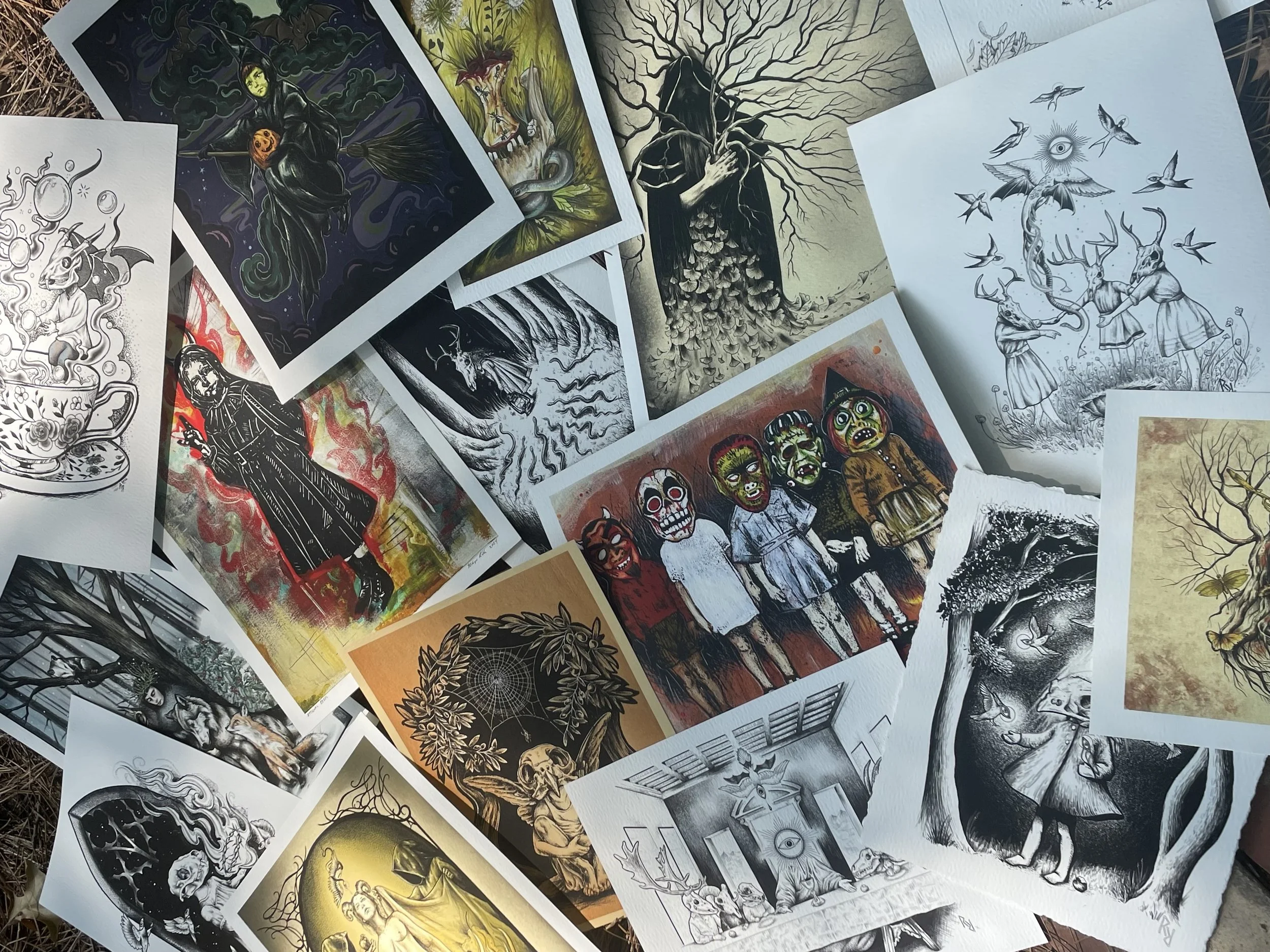
The following prints appeared as part of my Majestas series in 2022. Follow this link to order the prints that you see pictured here. https://nomadicalart.geogalleries.com/collection/25404
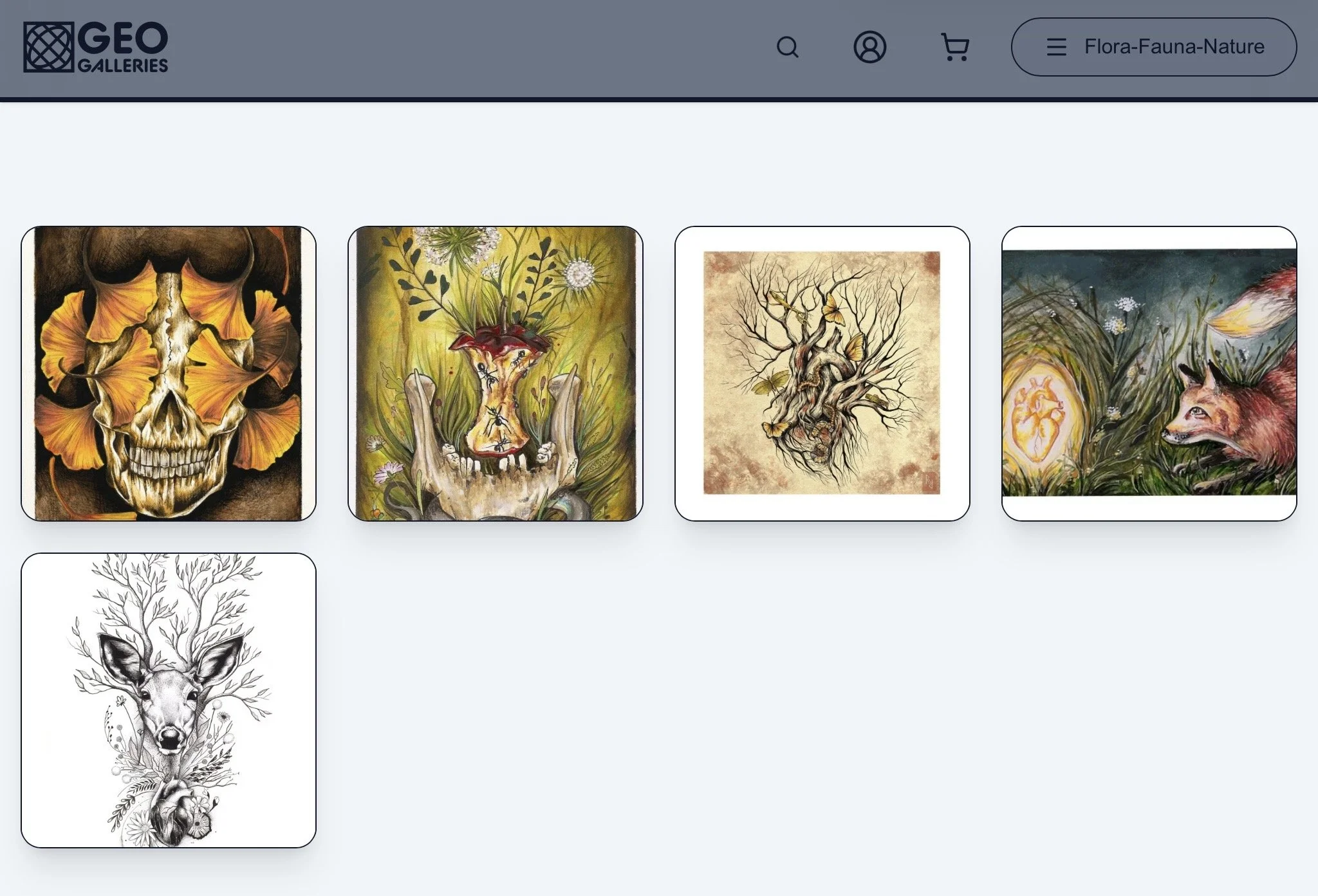
Prints inspired by the natural world. To order click this link,
Humor for weirdos- order prints here, https://nomadicalart.geogalleries.com/collection/25418
Prints of the occult - to order go here, https://nomadicalart.geogalleries.com/collection/25405
Halloween, Christmas, Solstice, and Easter are featured here. To order - https://nomadicalart.geogalleries.com/collection/25402
Primary art featured is from the Romantacy series- ACOTAR and the game and television show - The Last Of Us.
Order here, https://nomadicalart.geogalleries.com/collection/25401